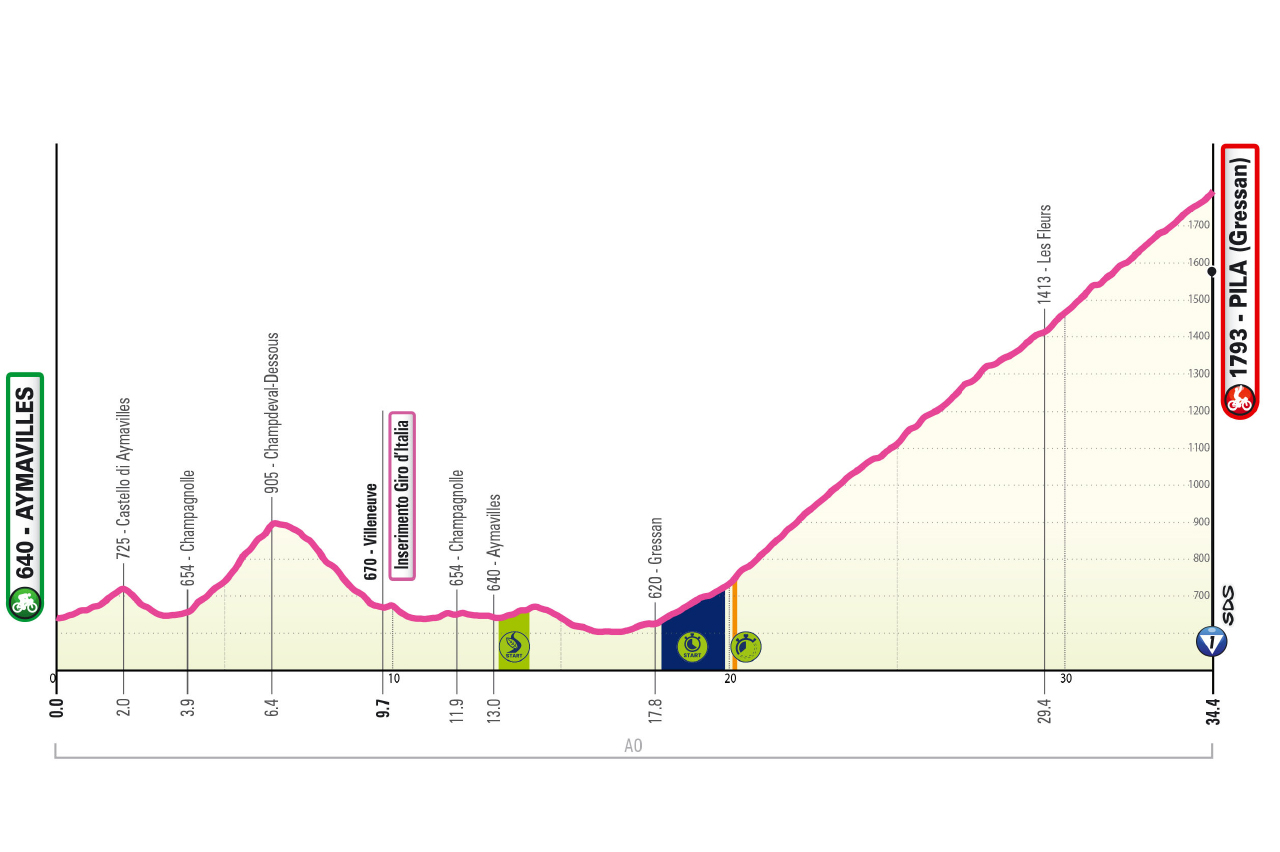
altimetria
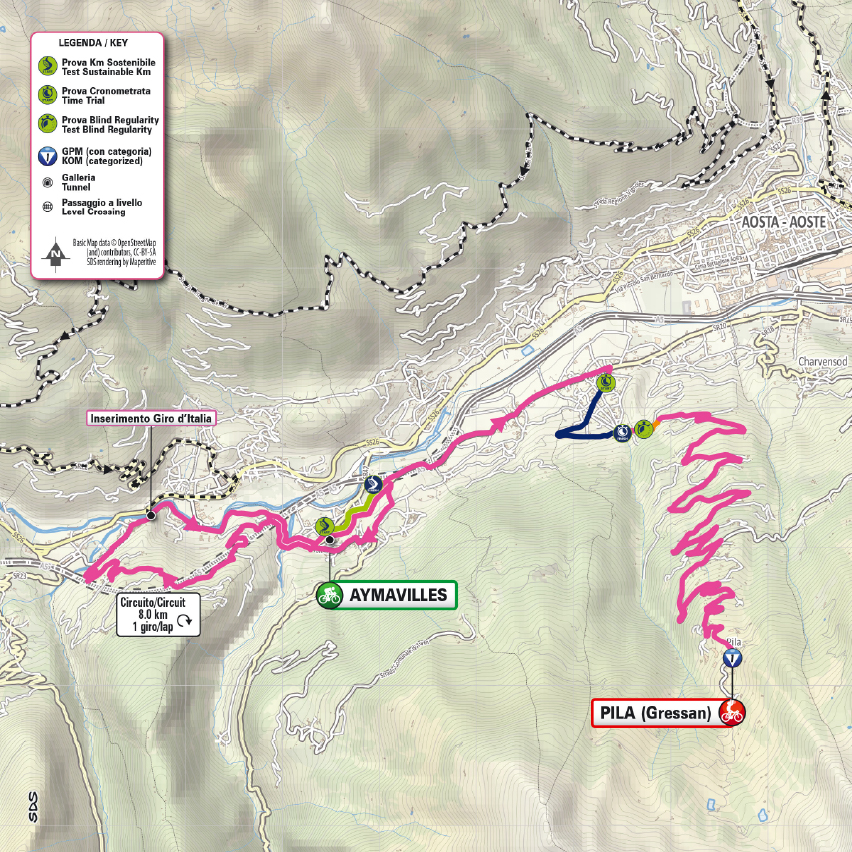
planimetria
crono tabella
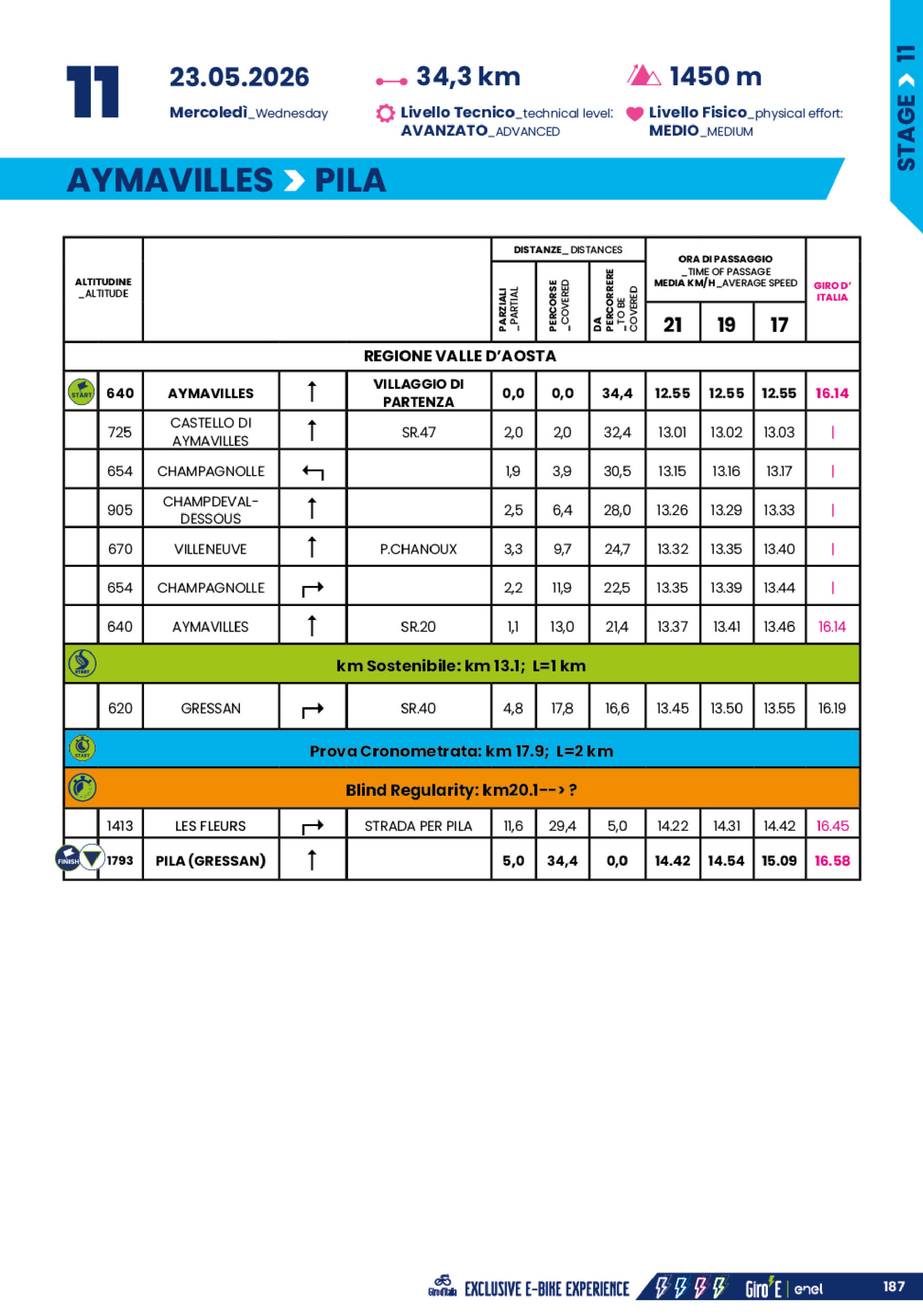

Sabato 23
Maggio 2026
34,4 km
Dislivello 1450 mt
Livello Tecnico: Avanzato
Impegno Fisico: Medio
 Partenza tra
Città di:
Tourism, nature and sports: a mountain holiday in Aymavilles is perfect for staying fit through sports and outdoor activities, surrounded by the greenery of vineyards, orchards, meadows, pastures, and forests. Within this landscape of extraordinary richness lies the Gran Paradiso National Park, the first national park in Italy, extending from 800 to 4,061 meters at the summit of Gran Paradiso, the only “four-thousander” entirely within Italian territory—a majestic massif rising with spectacular glaciers between Piedmont and the Aosta Valley. A highly evocative name for a true paradise of nature and mountains.
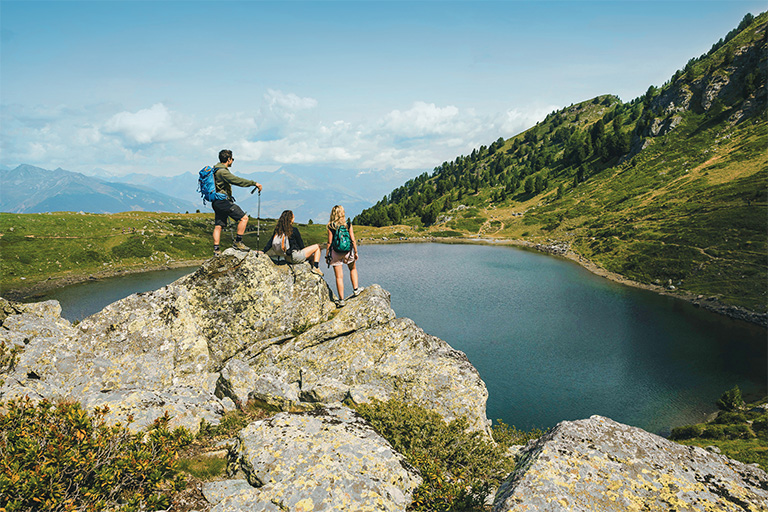
Rafting, mountain biking, trekking: Several cycling routes run through the valley floor among vineyards, and for those seeking a more challenging ride, a loop starts from Aymavilles climbing up to Ozein, Turlin, and Pila. When speaking of excursions, one often imagines high-altitude trails, but for all trekking enthusiasts even a town like Aymavilles offers excellent itineraries, not to mention the possibility of enjoyable walks along the valley floor, where clearings, woods, and cultivated fields alternate in a harmonious landscape.
The Municipality of Aymavilles is actively committed to promoting sustainability and green and slow mobility. Great importance is placed on proper waste collection, both for local operators (encouraging correct disposal and sorting of waste) and for visitors, through the widespread presence of recycling bins (with clear instructions on how to separate waste) and, above all, through dedicated communication initiatives (informational panels on recycling and expert-led activities) aimed at raising awareness.
The Administration also stands out for organizing events with a strong sustainable focus, such as bicycle tours, including e-bike routes designed for amateur cyclists eager to experience nature authentically. Events such as “Rando vins et chocolat” and the “Wine-Bike tour” combine the concept of slow mobility with the promotion of the local area, offering sustainable experiences that unite environmental respect with the authentic discovery of places and traditions.
Events organized in the Aymavilles area are designed to foster a strong sense of social connection, an especially meaningful element in today’s context: walking through villages or admiring the beauty of Aymavilles with a finger food snack or a glass in hand, listening to music and enjoying good company, helps restore a sense of community and conviviality while slowing the fast pace of modern life, even if just for an evening.
In the lead-up to each event, local associations are typically involved: alongside the Pro Loco, many other groups contribute by supporting activities or managing specific initiatives (for example: the Alpini group, volunteer firefighters, and active citizens for area management; ski clubs promoting youth activities; the Library Commission and the La Tornalla Cultural Association for historical and cultural insights, among others).
The morainic slopes of Aymavilles are particularly well suited to viticulture. Numerous native grape varieties thrive here—some cultivated for centuries, others once nearly abandoned and now successfully revived.
Aymavilles is part of the “Città del Vino” Association, founded in Siena on March 21, 1987. This network brings together municipalities and territories with a strong wine-producing vocation, all linked by at least one PDO or PGI designation. It promotes wine culture and represents an ideal itinerary through towns and villages that preserve traditions, history, and wine heritage.
The association supports sustainable development projects, with a strong focus on landscape protection and territorial balance, as well as the promotion of local wines and native grape varieties. It also works with regional and national institutions to support policies in favor of Italian wine and wine tourism.
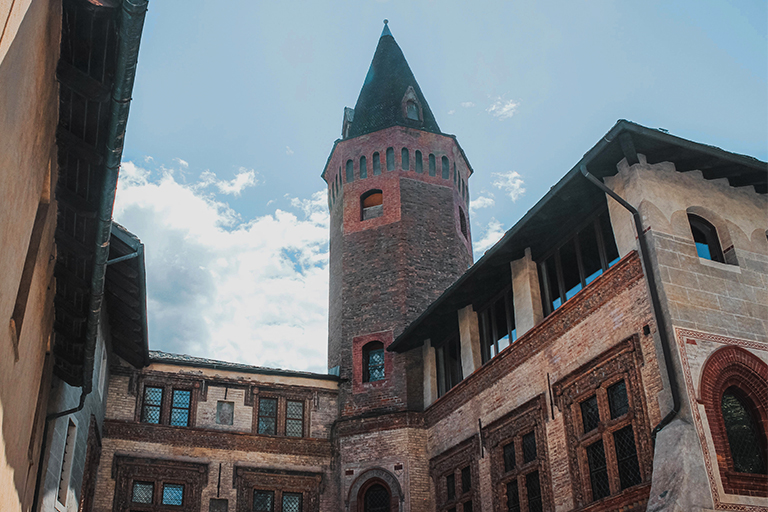
Castle: The Castle of Aymavilles, built in the 13th century, stands at the entrance to the Cogne Valley, on a sunny and commanding promontory. Its unmistakable structure harmonizes the sinuous lines of its four towers with the sober elegance of its pale façades, creating a perfect balance between grandeur and architectural refinement.
During the 19th and 20th centuries, following several changes of ownership after the extinction of the Challant family— the historic noble lineage that had owned the castle for centuries—numerous internal modifications were carried out, linked to its use as a summer residence by Piedmontese and Ligurian families.
Today, the castle tells two stories of 19th-century collecting: that of Vittorio Cacherano Osasco della Rocca, the last descendant of the noble Challant family, and that, born almost at the same time, of the Accademia di Sant’Anselmo, a société savante devoted to preserving local historical memory. It is a welcoming 19th-century house-museum that surprises visitors, while still preserving the narrative of its medieval remains, which reach their peak in the attic with an original and splendid wooden beam structure dating back to the 15th century.
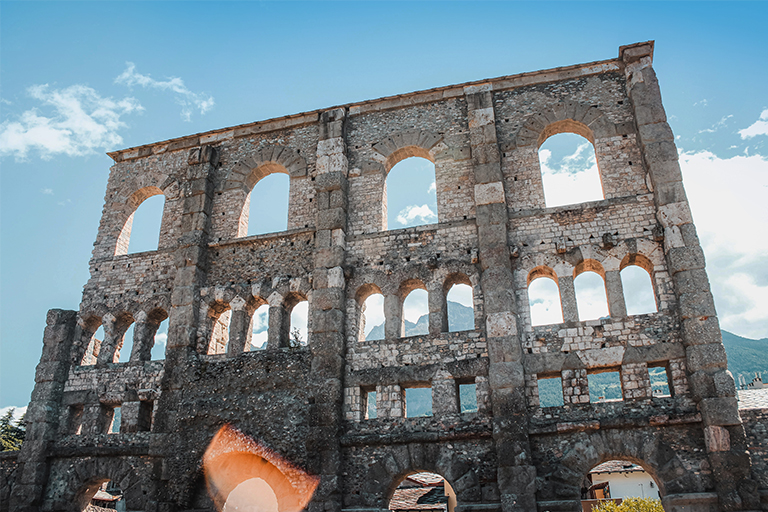
Pont D’Ael: Where the village ends and the steep rocky slope plunges into the Grand Eyvia stream, the extraordinary Roman bridge-aqueduct of Pont-d’Ael appears quite unexpectedly.
A grand hydraulic work built by a wealthy and enterprising man from Padua in 3 BC, as evidenced by an inscription that allows the monument to be precisely dated and attributed to the entrepreneurial initiative of Caius Avillius Caimus. A masterpiece of Roman engineering, it is divided into two levels: an upper open walkway, now accessible on foot but originally serving as the water channel, and a lower covered passage used for the transit of people and animals.
A private infrastructure, as stated by the inscription still visible at the center of the façade facing the valley, likely built to channel water toward the marble quarries of Aymavilles. A site that, with its unexpected grandeur, remarkable state of preservation, and extraordinary natural setting, has all the qualities needed to impress even 21st-century visitors.
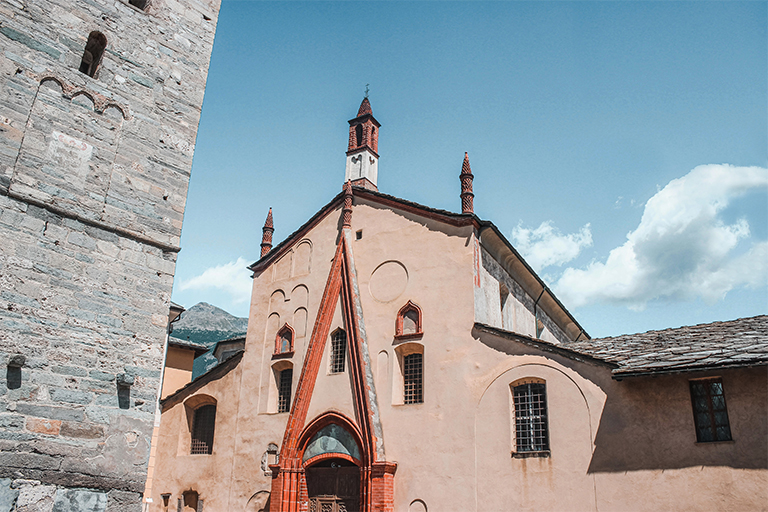
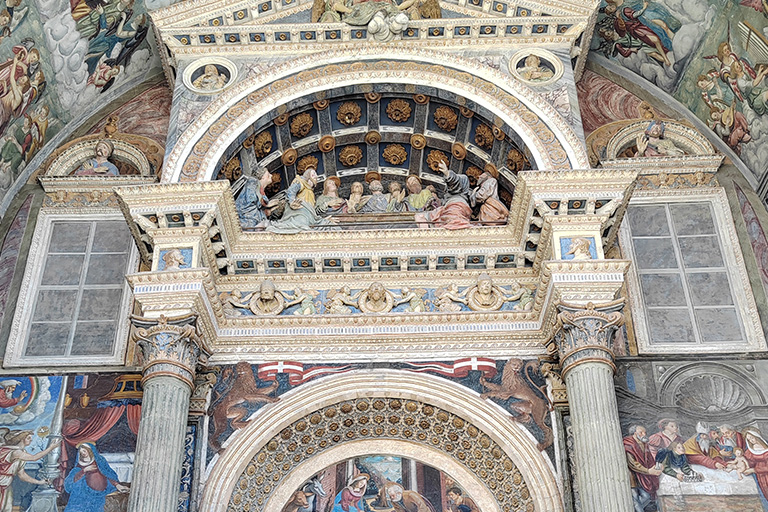
Crypt: This is one of the oldest crypts known in the Aosta Valley; its original section dates back to the 8th century, although recent research suggests an even earlier origin (in Roman times, a settlement existed here, where traces of possible thermal structures have been found). Popular tradition links it to the presence in Aymavilles of an ancient community of Benedictine monks, beautifully expressed in the phrase les mains à la terre, l’œil aux livres, le cœur au ciel, although this is not documented by historical sources.
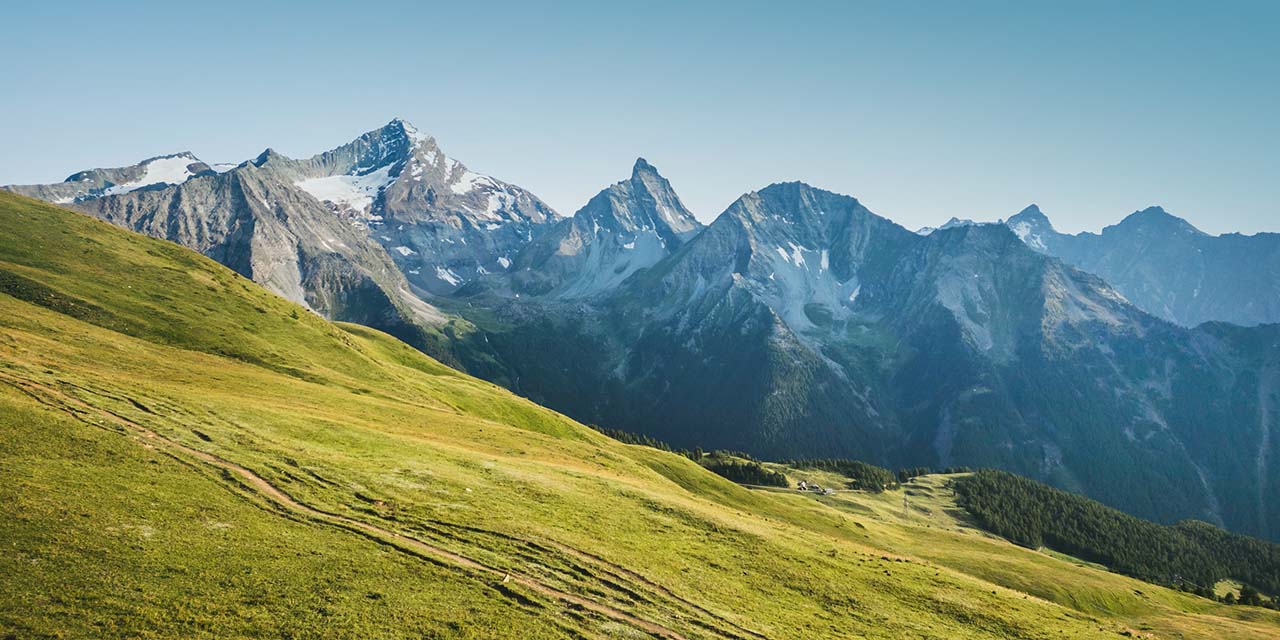
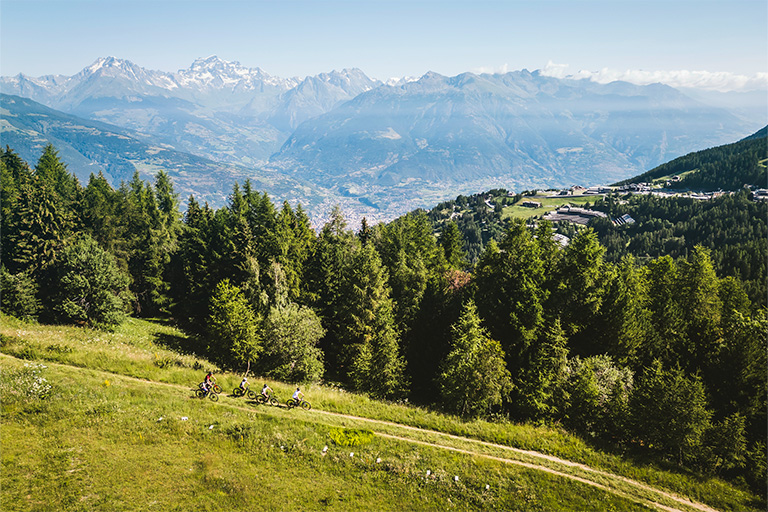
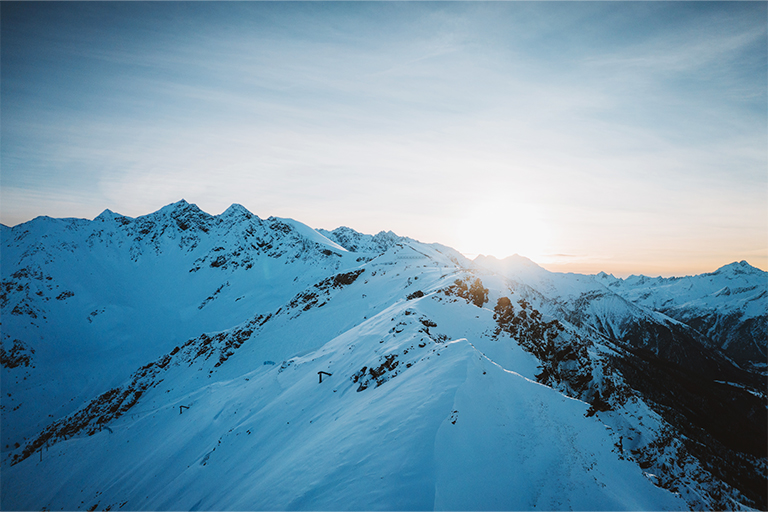
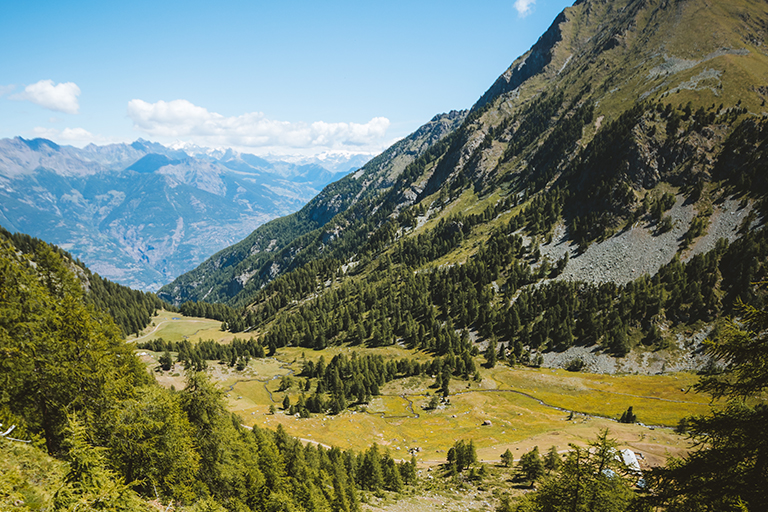
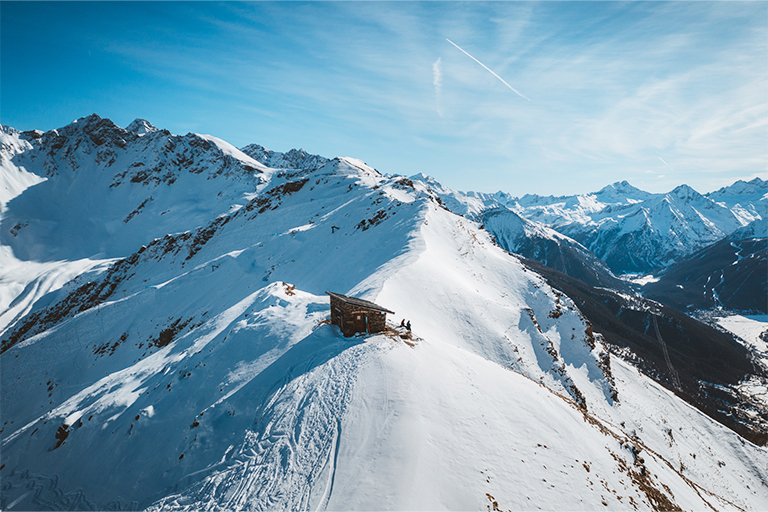
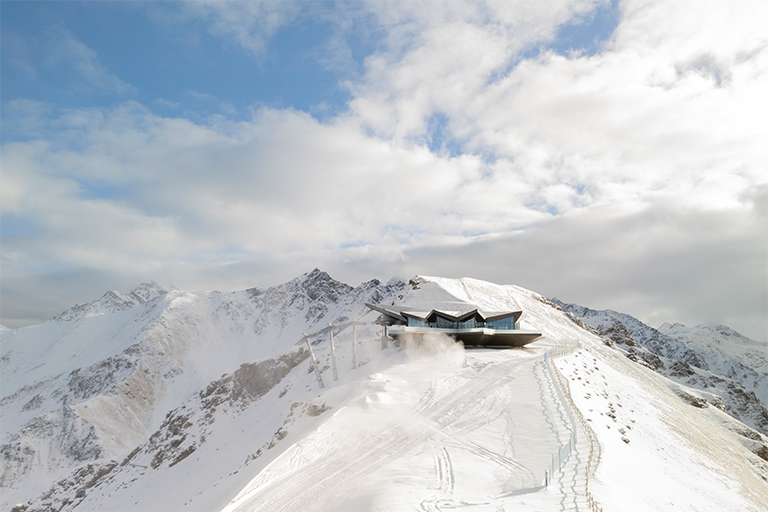
Pila is an alpine resort in the Aosta Valley, located within the municipality of Gressan, above the city of Aosta. It sits on a wide natural terrace overlooking the central basin of the valley and enjoys a panoramic position surrounded by some of the highest peaks in the Alps. Established as a ski resort in the post-war period, Pila is directly connected to Aosta by a cable car and represents one of the region’s main tourist destinations. Alongside its winter vocation, the resort is now also popular during the summer season, thanks to its hiking trails and high-altitude natural environment.


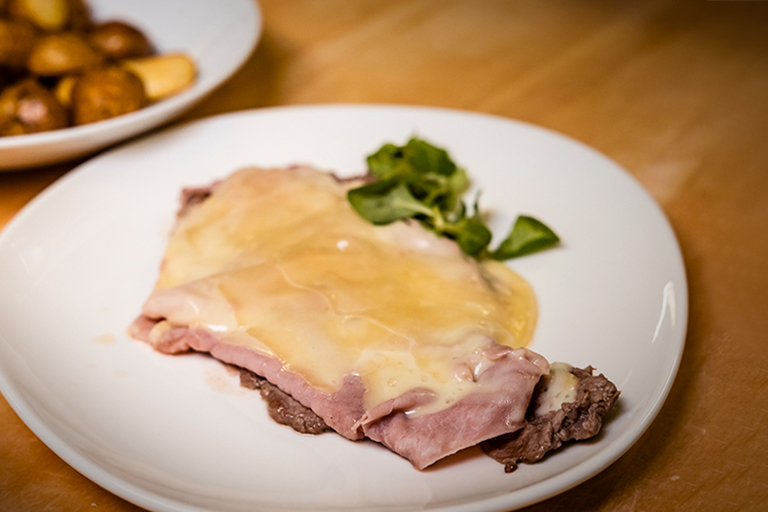
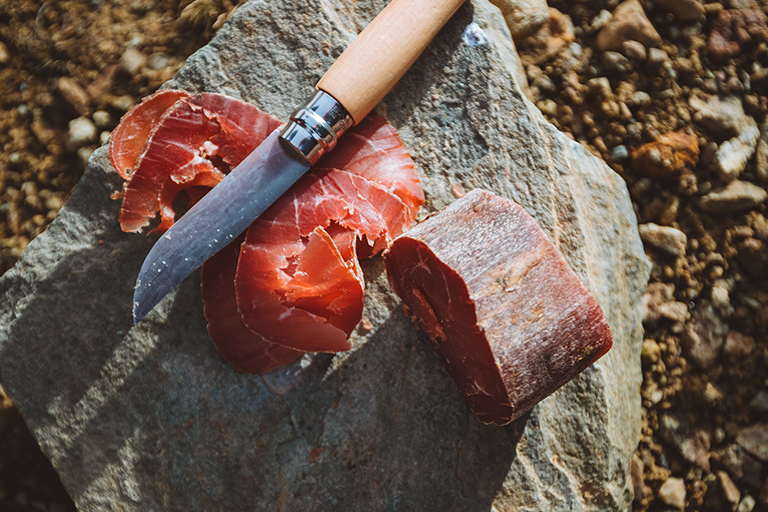
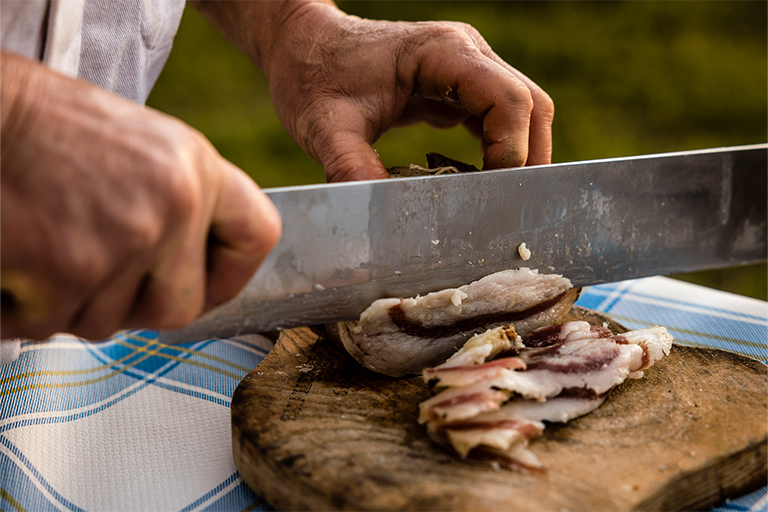
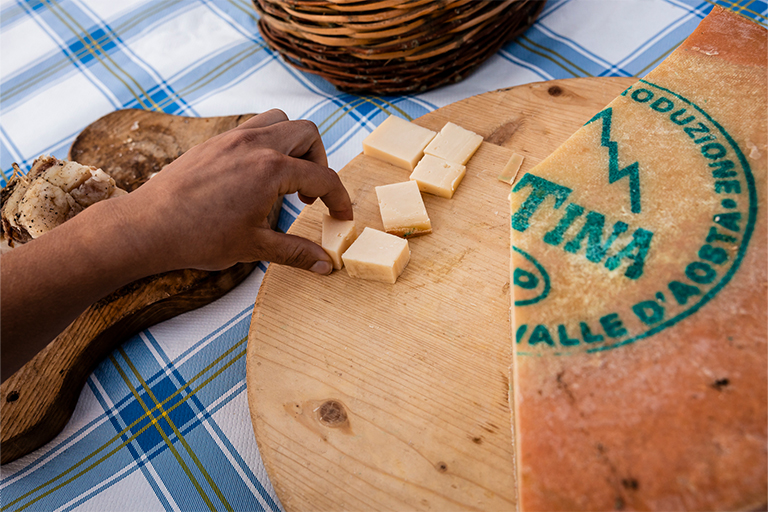
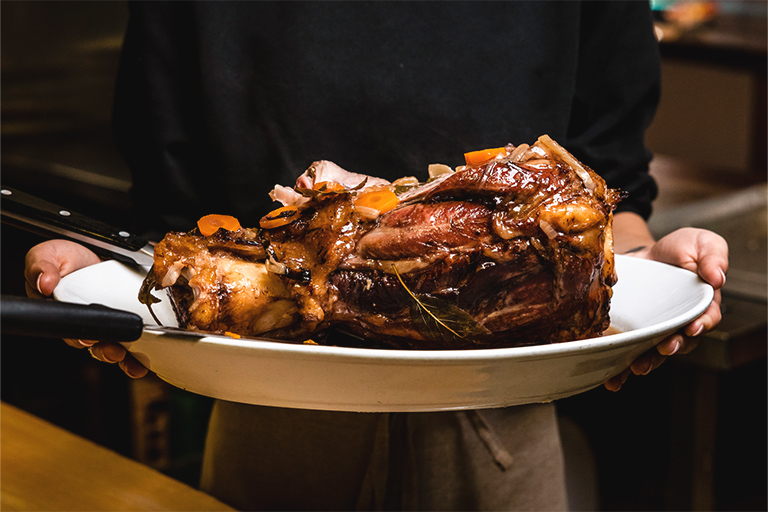
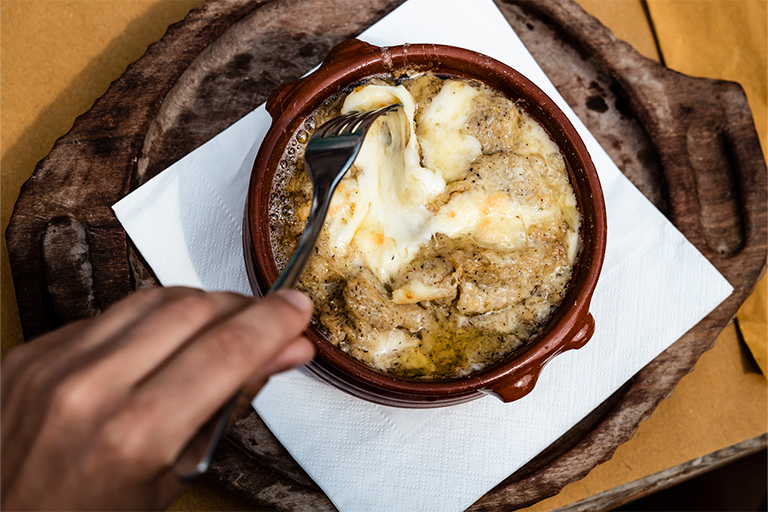
The culinary tradition of Pila and the Gressan area reflects the richness of Valdostan cuisine, deeply rooted in the Alpine environment. Among its most iconic products is Fontina DOP, the region’s signature cheese, alongside cured meats such as Lardo d’Arnad DOP, mocetta, and Jambon de Bosses DOP. Local produce also includes Gressan apples, grown in a particularly favourable microclimate. The cuisine features hearty, comforting dishes such as fonduta alla valdostana, polenta concia, carbonada, and cotoletta alla valdostana, as well as traditional recipes like seupa à la vapelenentse, an authentic expression of mountain food culture.
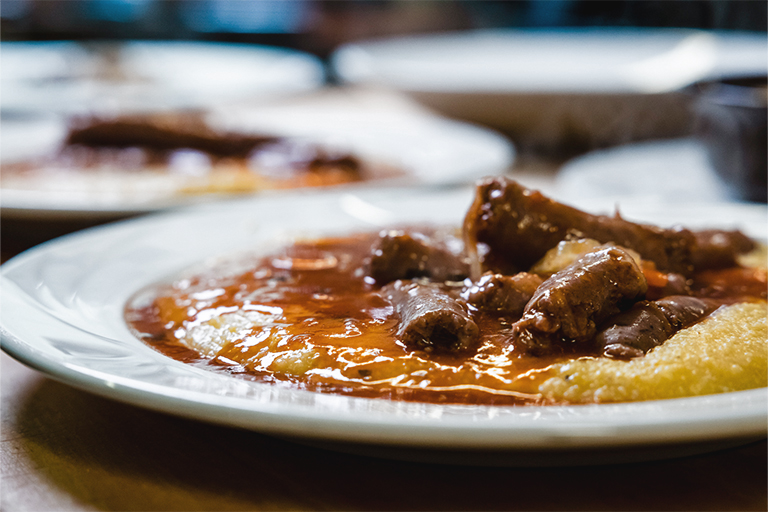
The Aosta Valley is distinguished by a winemaking tradition shaped by mountain conditions and native grape varieties. Among the reds, Petit Rouge stands out for its versatility and fruity character, alongside Fumin, more structured and spicy, and Torrette, a balanced wine that truly represents the valley. Beyond wine, local traditions include distinctive beverages such as Génépi, an Alpine herbal liqueur, as well as a variety of grappas and spirits infused with natural essences like yarrow, dandelion, tobacco, and absinthe – often enjoyed as digestifs.
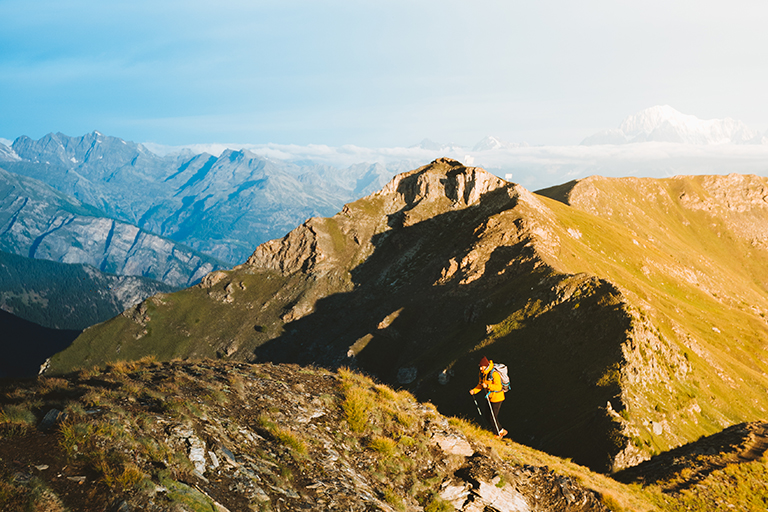
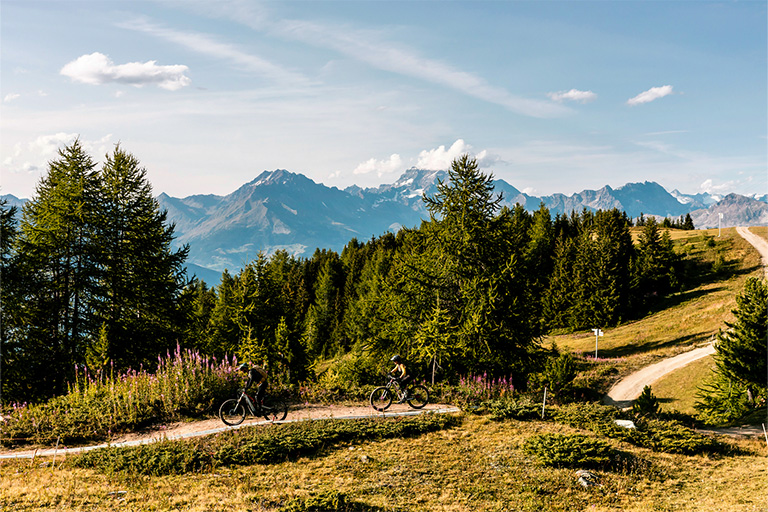
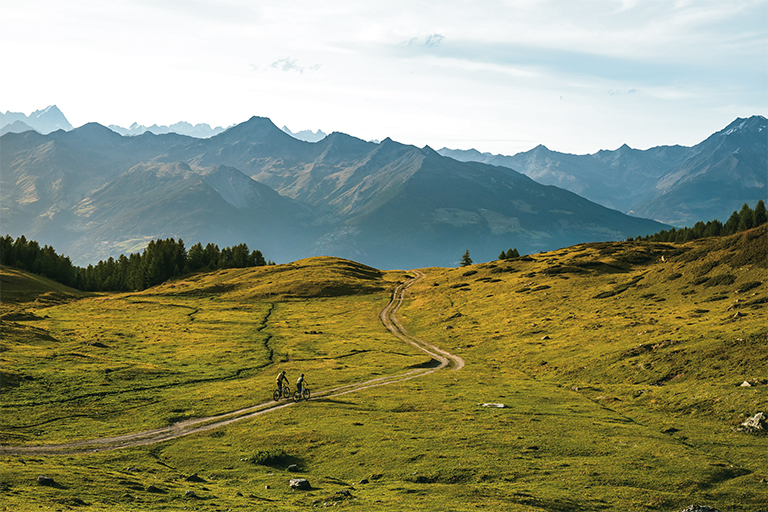
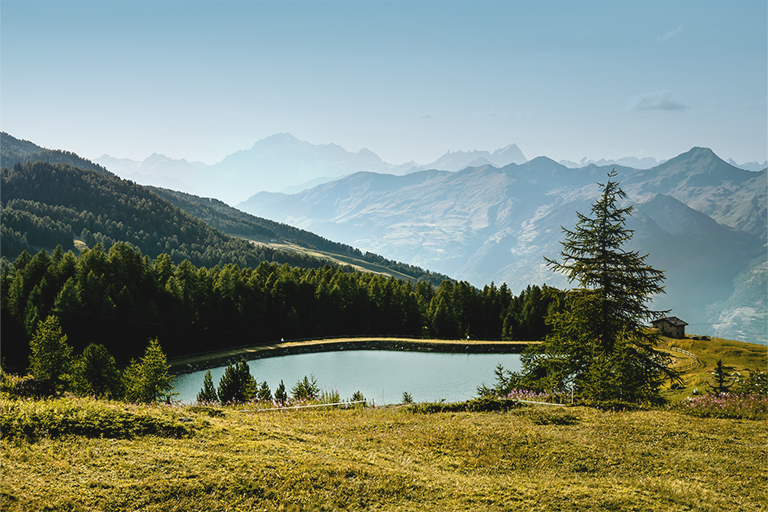
Set within the municipality of Gressan and overlooking the Aosta basin, Pila is an alpine destination where nature, sport, and high-altitude panoramas come together. Directly connected to the city by cable car, it offers a privileged gateway to the mountain environment. The area features an extensive network of trails for trekking and trail running, as well as routes for mountain biking and family-friendly itineraries.
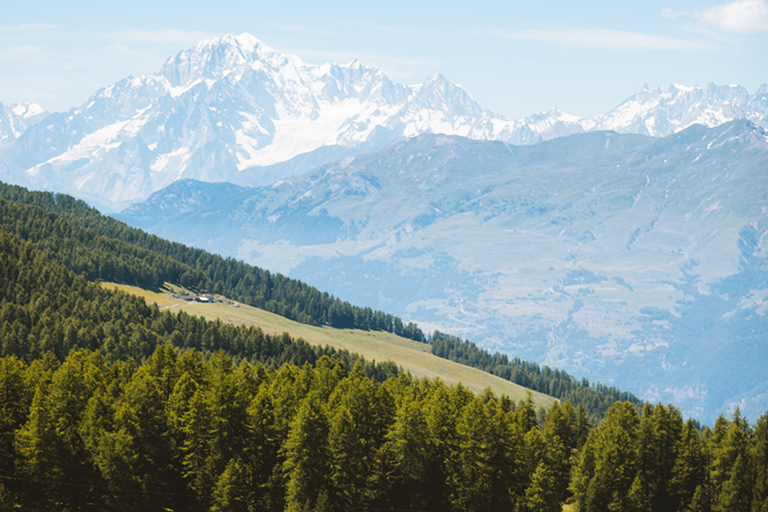
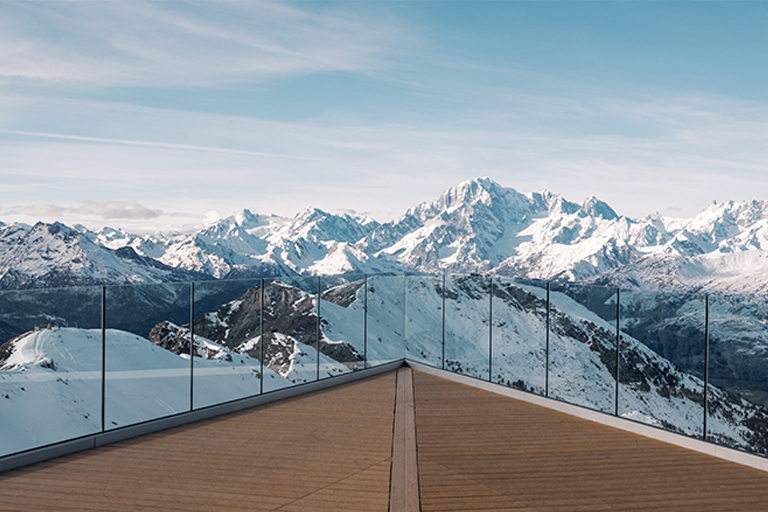
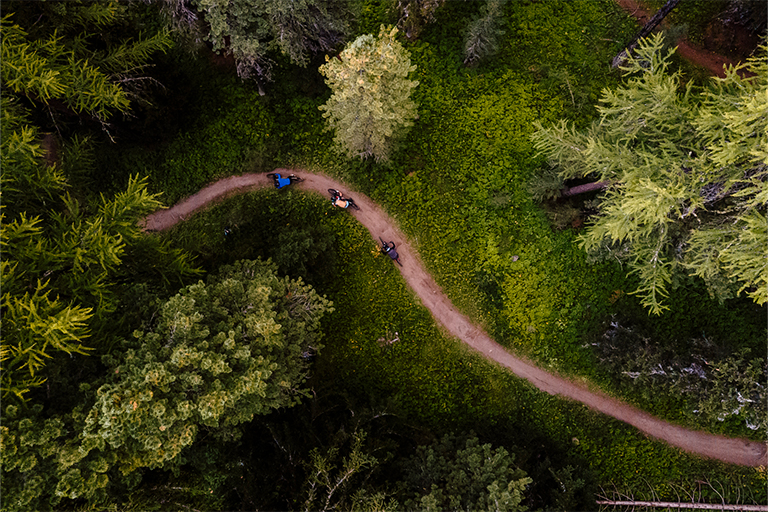
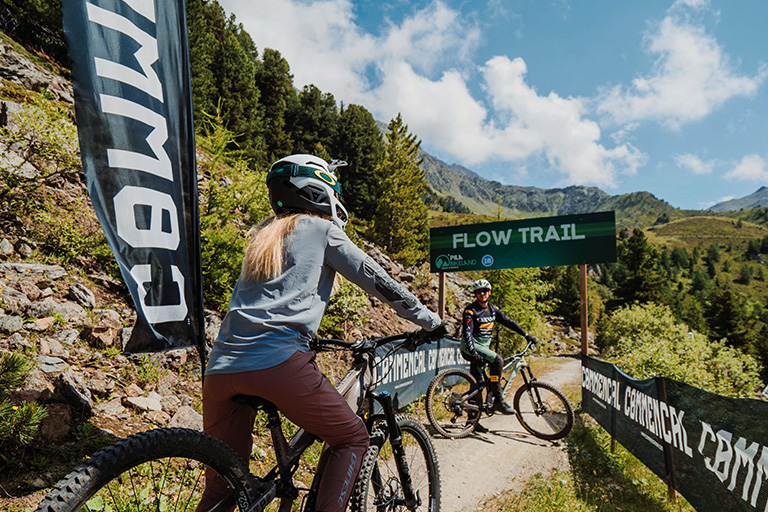
A defining landmark is the Pila Star, a panoramic point at 2,723 metres offering sweeping 360° views across the Alps, including Mont Blanc, the Matterhorn, Monte Rosa, and Gran Paradiso. Outdoor highlights include the internationally recognised Pila Bike Park, with trails winding through forests and open slopes, alongside areas dedicated to e-bikes, cross-country, and technical training.
The territory also offers more accessible experiences, such as the Adventure Park set among the trees, and natural sites like Lake Chamolé, an alpine lake easily reached and surrounded by high-altitude pastures. Nearby stands the Christ of Chamolé, a scenic and spiritual viewpoint.
Among the area’s most evocative spots is the Hermitage of San Grato, a natural balcony overlooking the valley, immersed in woodland. In the surroundings, Gressan preserves historic sites such as Maison Gargantua, an ethnographic centre and starting point for nature trails, and the La Tour de Villa Castle, a medieval complex with views over the plain.
Completing the picture is the proximity to Aosta, a Roman-founded city visible from above with its major monuments, set within a landscape that seamlessly blends ancient history with the dramatic beauty of the Alps.
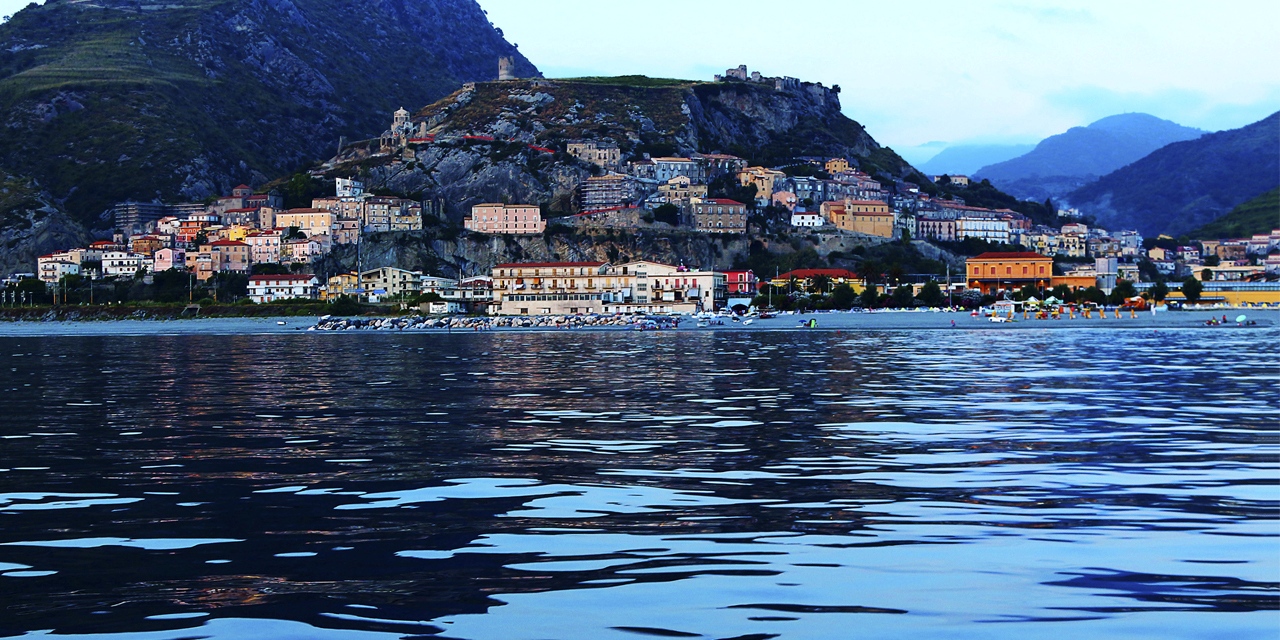
Amantea - Cosenza
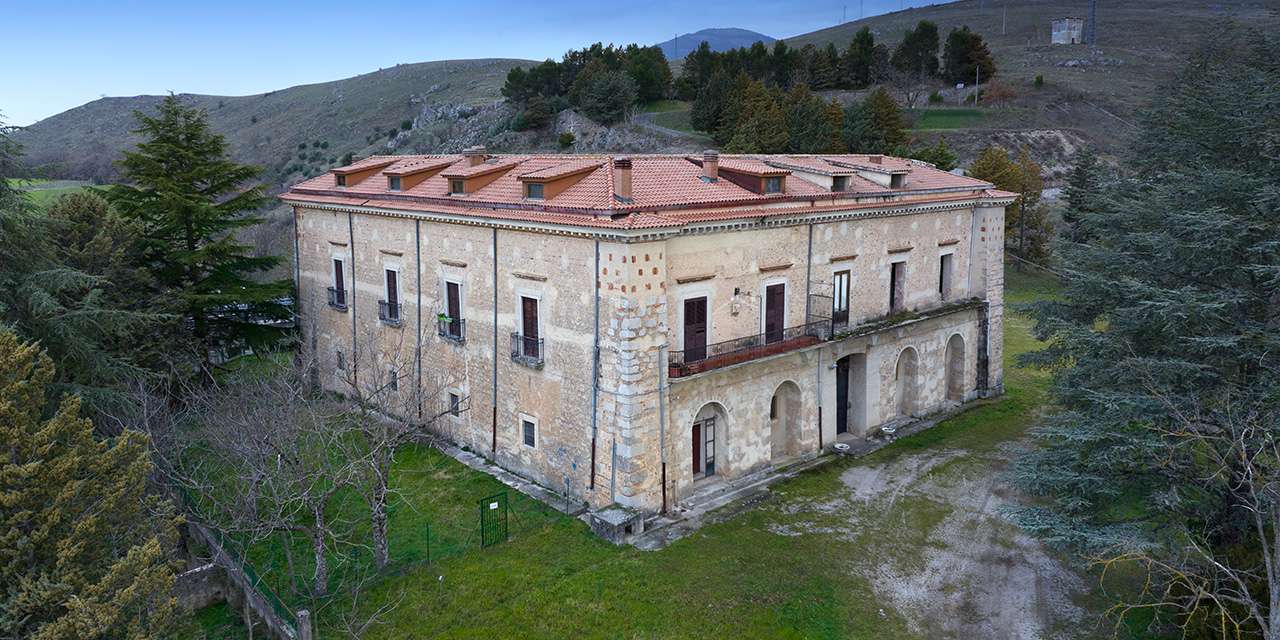
Villa d'Agri di Marsicovetere - Potenza
Pompei - Napoli
Roccaraso - Blockhaus
Grottammare - Fermo
Sasso Marconi - Corno alle Scale
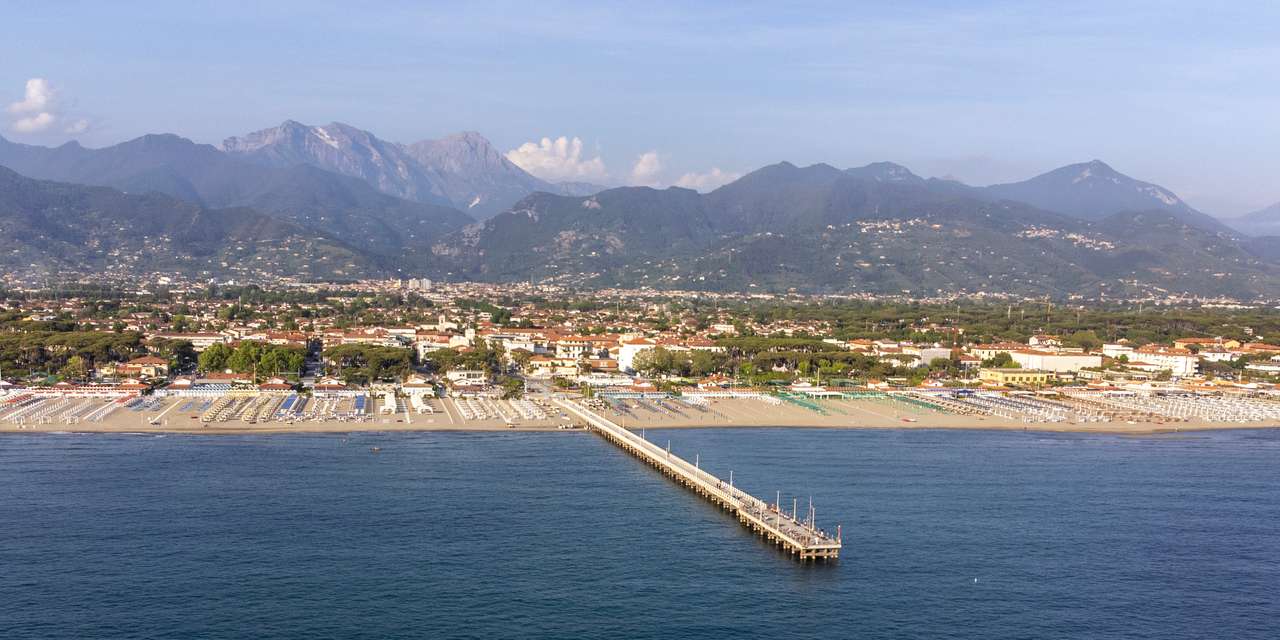
Forte dei Marmi - Massa
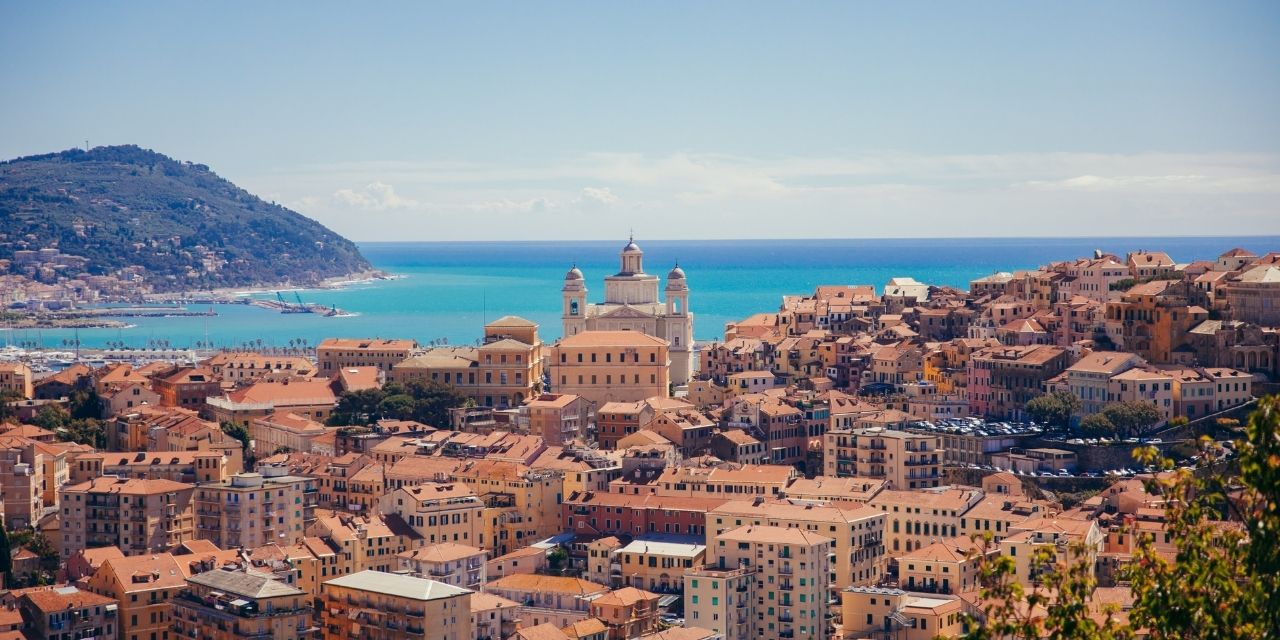
La Spezia - Chiavari
Savona - Novi Ligure
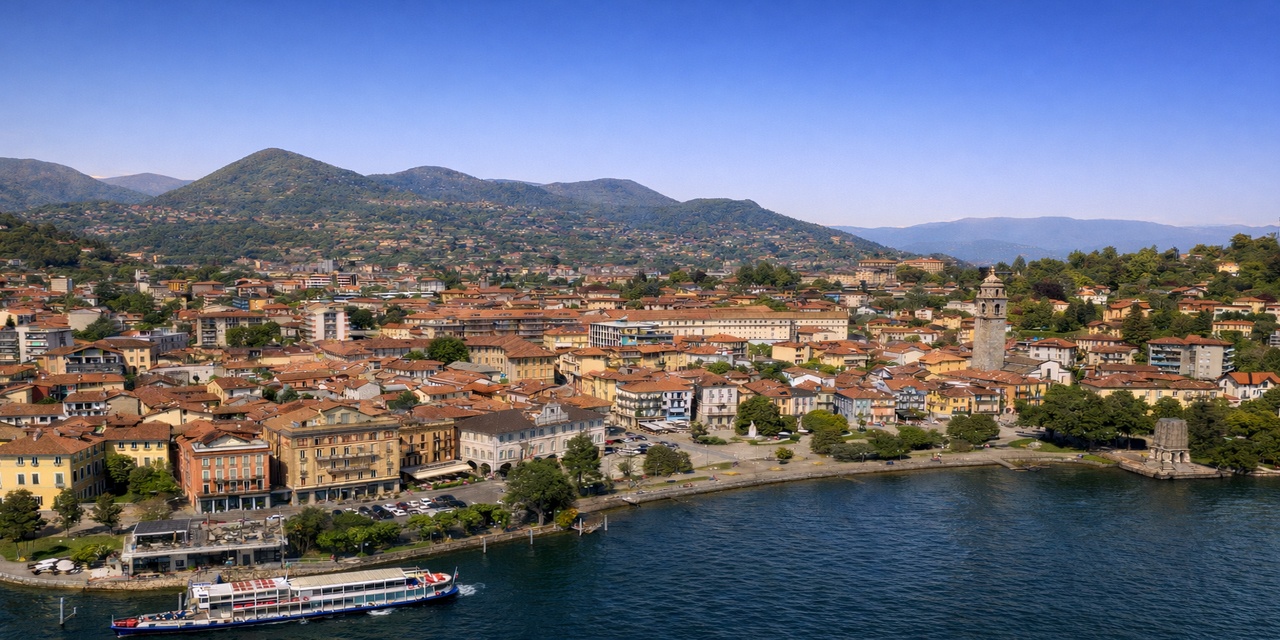
Angera - Verbania
Aymavilles - Pila
Assago - Milano
Biasca (CH) - Carì (CH)
Tione di Trento - Andalo
Valdobbiadene - Pieve di Soligo
Agordo - Alleghe (Piani di Pezzè)
San Daniele del Friuli - Piancavallo
Roma - Roma