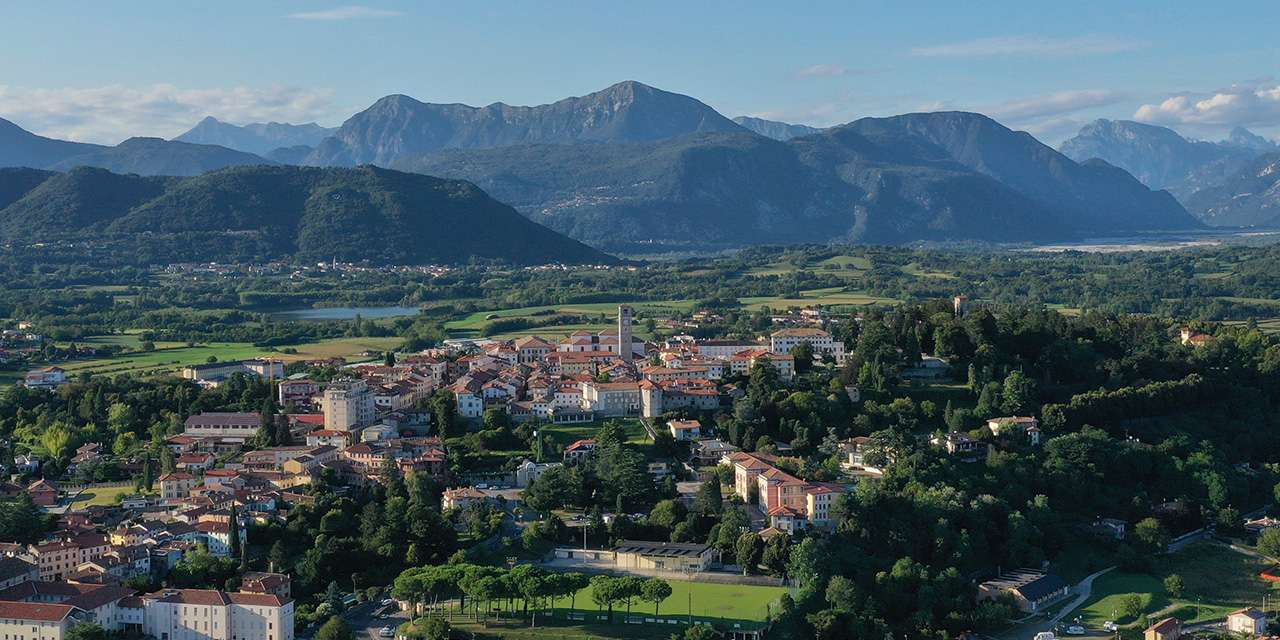
altimetria
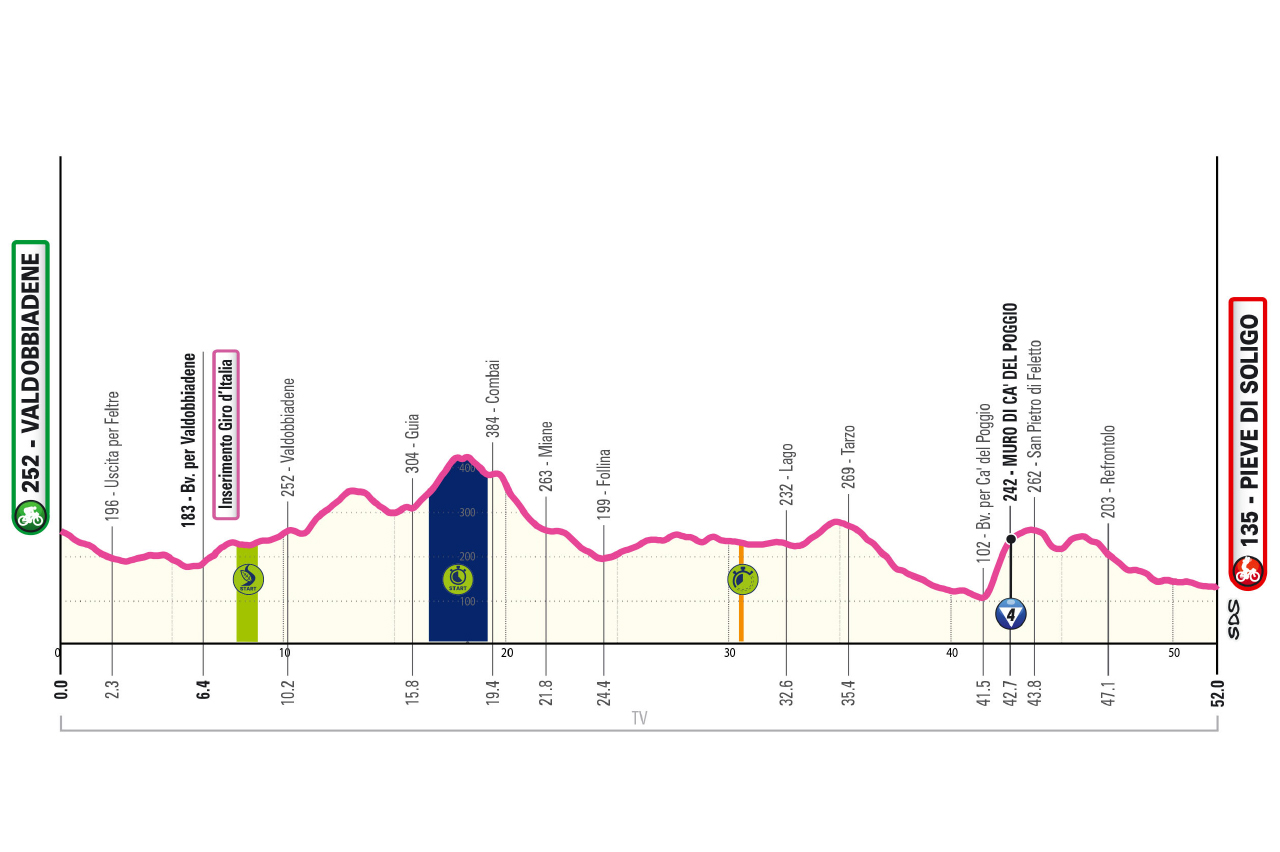
planimetria
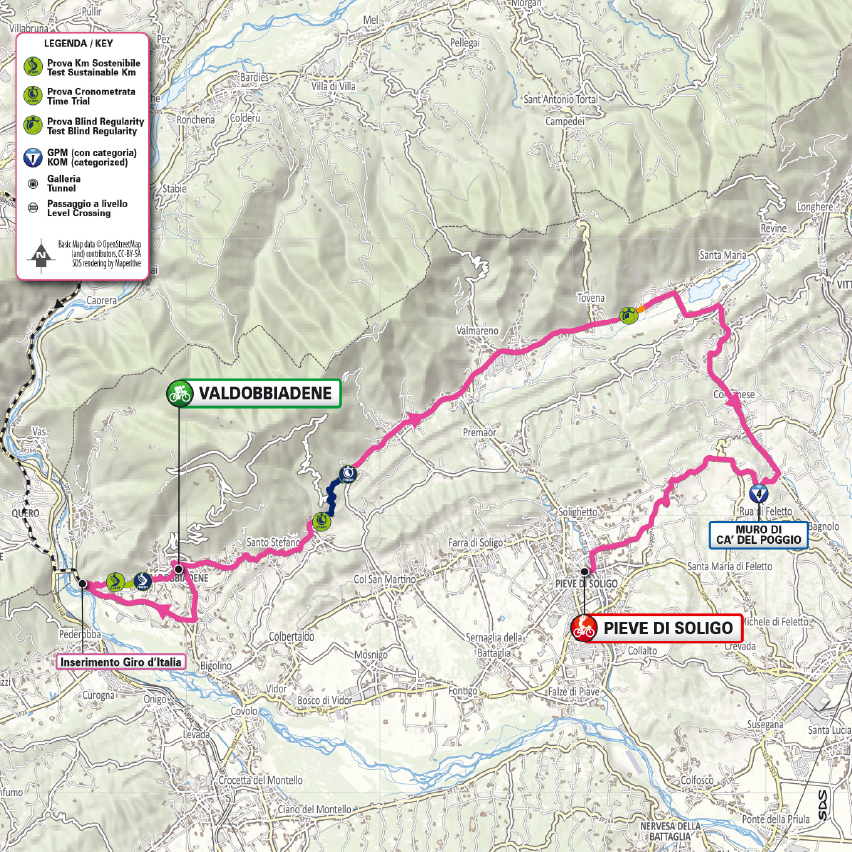
crono tabella

Giovedì 28
Maggio 2026
52 km
Dislivello 700 mt
Livello Tecnico: Avanzato
Impegno Fisico: Medio
 Partenza tra
Città di:
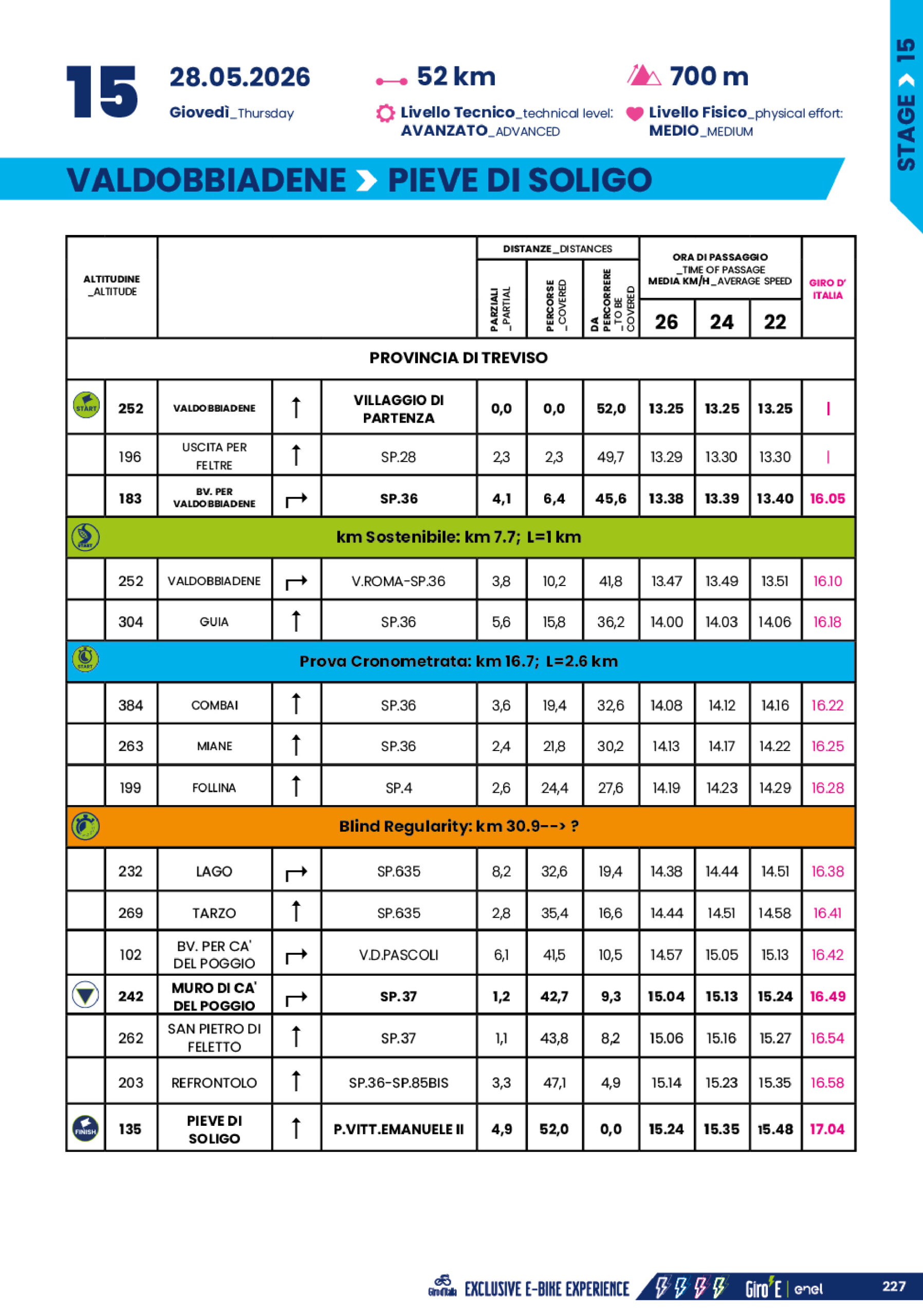
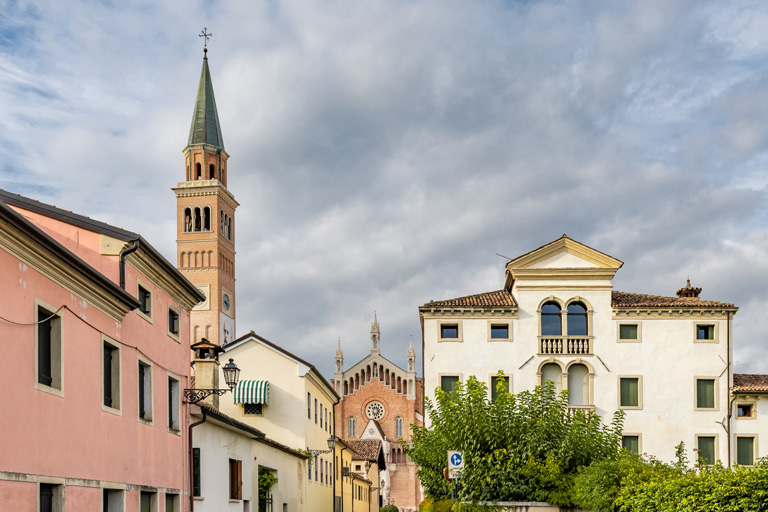
Valdobbiadene, located among the Prosecco Hills of Conegliano Valdobbiadene in the province of Treviso, is a charming Venetian town with roots dating back to the Paleolithic Era. Its name derives from the Latin “Duplavilis,” referring to its ancient position between two branches of the Piave River.
Valdobbiadene is renowned for its Valdobbiadene DOCG wine, produced on the Prosecco Hills of Conegliano and Valdobbiadene, a UNESCO World Heritage Site. This sparkling wine, known for its fruity and floral aromas, is the symbol of the region, accompanied by a traditional cuisine rooted in local Treviso Province products such as radicchio from Treviso, alpage cheeses from Monte Cesen, and cured meats made by local farms.
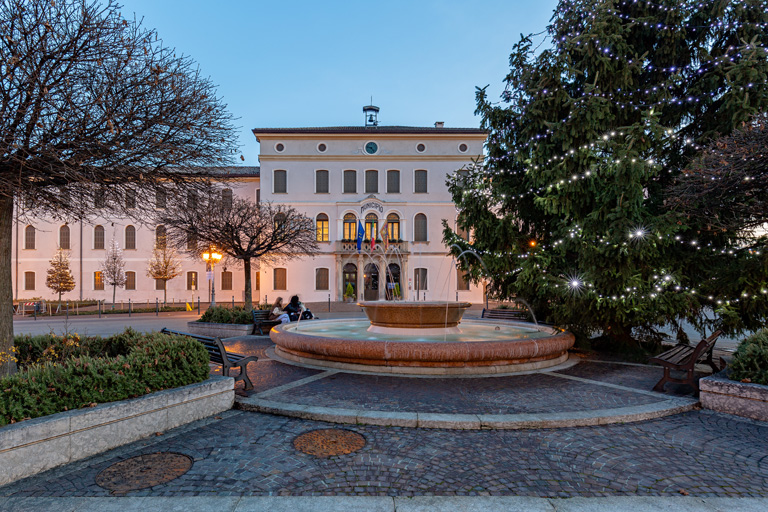
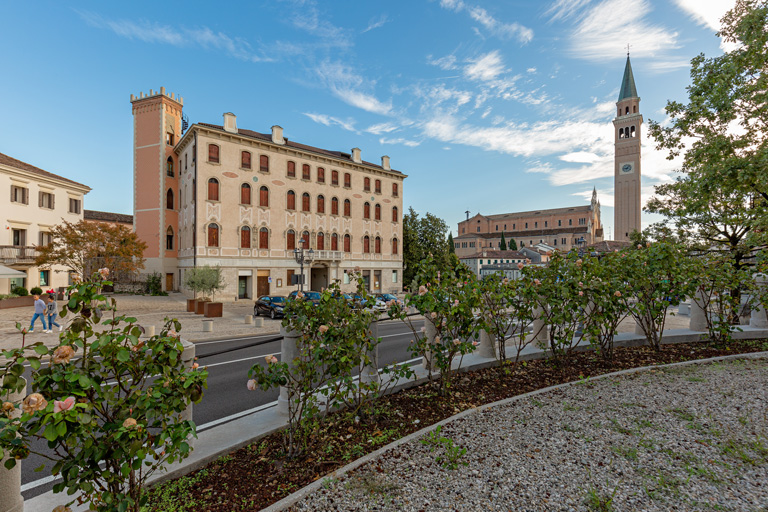
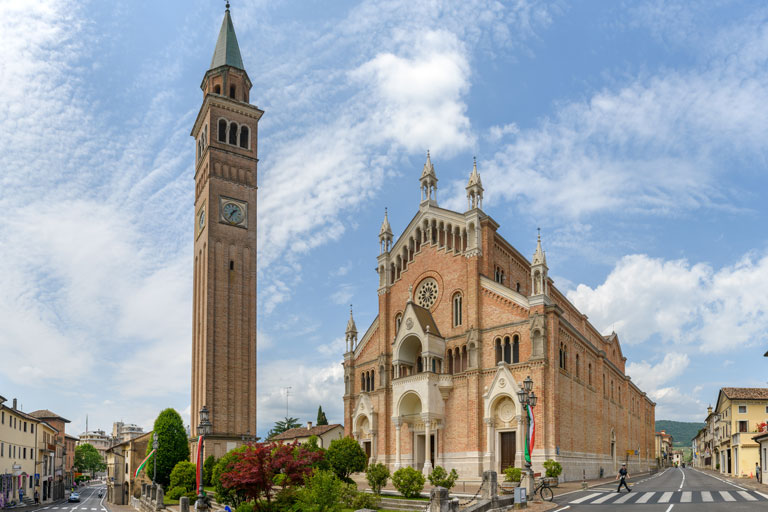
The heart of Valdobbiadene is the Piazza, dedicated to Guglielmo Marconi, which was completely renovated in early 2022 and is dominated by the 14th-century Cathedral and the imposing 1743 bell tower, both damaged during the First World War and later rebuilt.
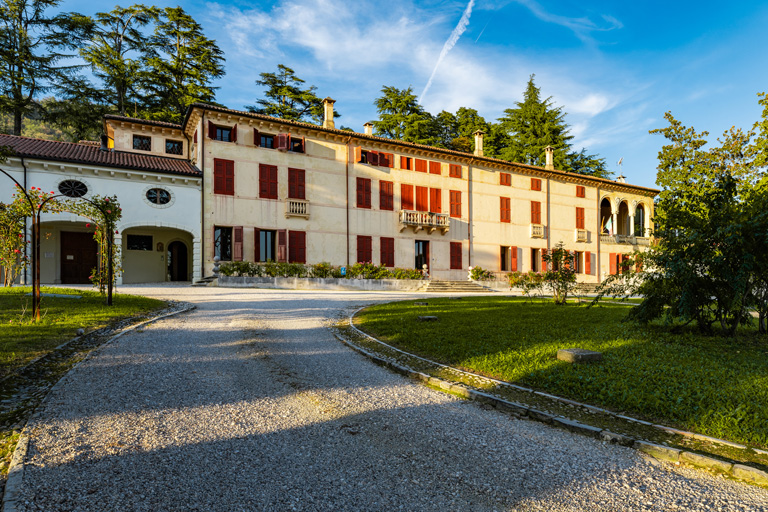
Not far away is Palazzo Celestino Piva, a former school inaugurated in 1900 and now home to the library and auditorium. Continuing along Via C. Piva, you reach Villa dei Cedri, an elegant Art Nouveau building surrounded by a public park that is now the headquarters of the Association for the Heritage of the Prosecco Hills of Conegliano and Valdobbiadene.
The Church of San Floriano, located on the hill of the same name and accessible from Valdobbiadene, offers a panoramic view of the UNESCO hills. In the square in front is the “Literary Bench,” a symbol of the link between the Piave River and Monte Cesen.
The International Donor Temple, a meeting place and reflection dedicated to blood donors, was built in the Pianezze del Monte Cesen area.
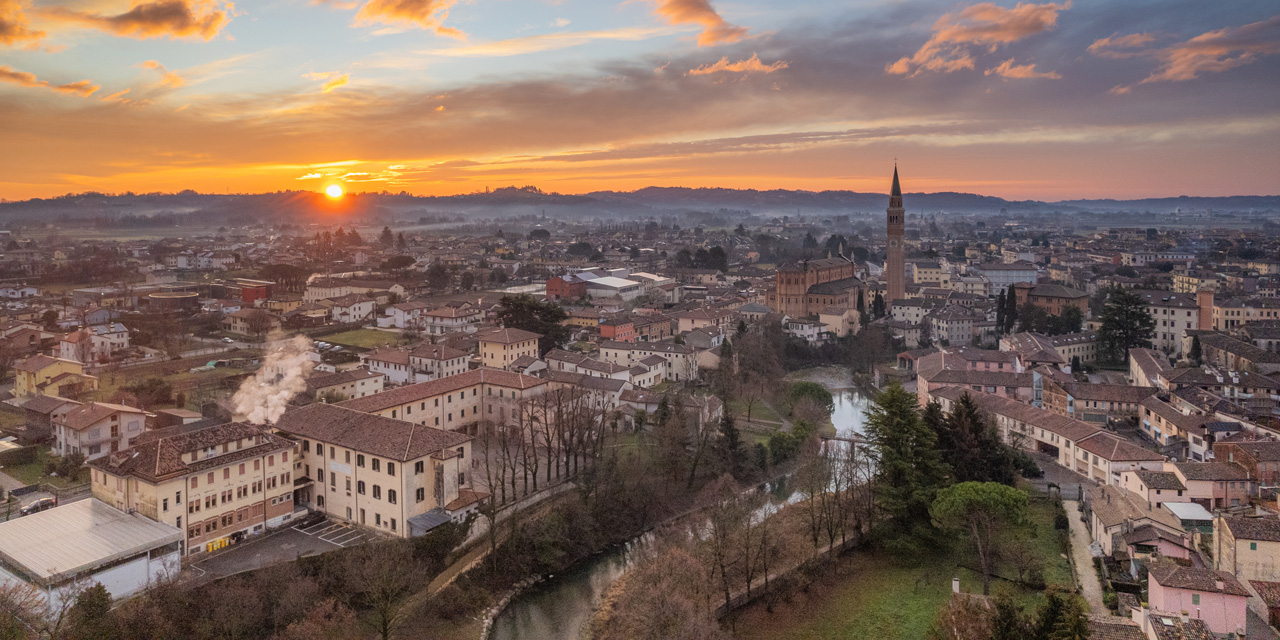
Set within the hilly landscape of the Quartier del Piave, Pieve di Soligo is a town in the province of Treviso crossed by the Soligo River. Its origins are ancient and closely linked to the religious and administrative role of the parish church, from which the town takes its name. The municipal area lies within the Prosecco Hills of Conegliano and Valdobbiadene, recognised as a UNESCO World Heritage Site, a landscape shaped over the centuries by viticulture.
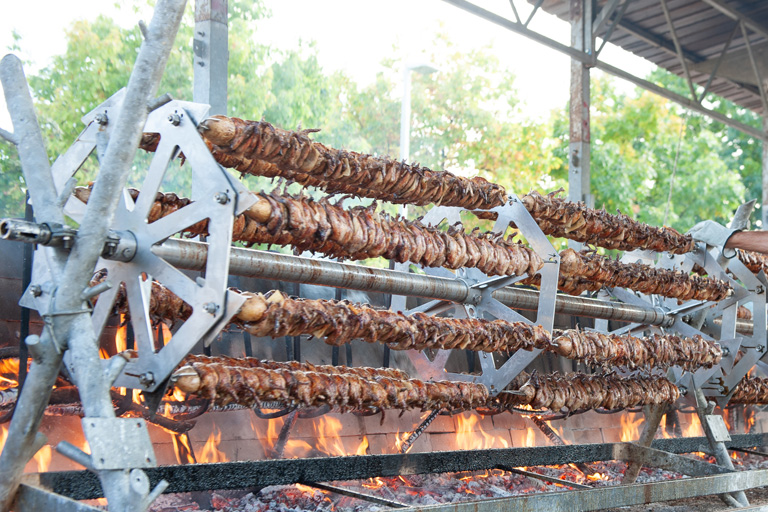
Pieve di Soligo’s food culture is pure Veneto at its most authentic: rich in tradition and built around bold, communal flavors. The undisputed star is spiedo, a slow-roasted meat feast that defines the local identity. It’s celebrated every year with the legendary Spiedo Gigante, an event dating back to 1956 that has even made it into the Guinness World Records. Hundreds of kilos of meat – especially quail – are cooked for hours over an open spit and served with classic white polenta. Keeping this tradition alive is the Accademia dello Spiedo d’Alta Marca, dedicated to preserving recipes and safeguarding local products.
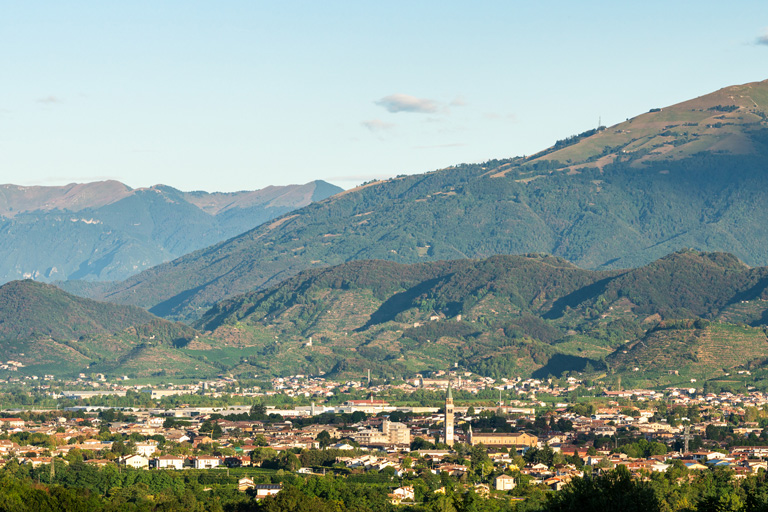
Pieve di Soligo sits at the heart of the Conegliano-Valdobbiadene Prosecco DOCG area, a UNESCO World Heritage cultural landscape since 2019. Here, vineyard-covered hills roll endlessly, shaped over centuries by the bond between people and land. The result is one of Italy’s most celebrated wines: Prosecco DOCG, loved worldwide for its fine bubbles, fresh character, and elegant balance – an authentic expression of this unique terroir.
Cathedral of Santa Maria Assunta – Built between 1936 and 1937 by architect Domenico Rupolo. On the wall of the left nave there is a chapel housing the ancient baptismal font and the 1540 altarpiece by Francesco da Milano depicting the Assumption of Mary. The works of sculptors Marta Sammartini and Giovanni Possamai adorn the side altars. Inside, the tomb of Blessed Giuseppe Toniolo is preserved.
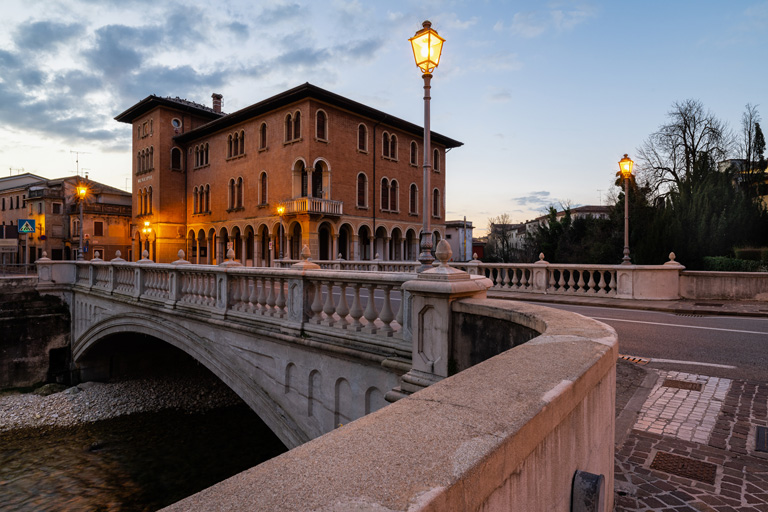
Ponte del Contenzioso – Originally built of red-painted wood, it rested on a single central pillar and was covered by a roof similar to that of the bridge of Bassano del Grappa. Its name derives from the disputes that often took place there, so much so that it became known in history as the “bridge of contention.” It was named as such by the Brandolini counts in their appeal to the Serenissima, in order to report violent incidents that occurred nearby. The right bank belonged to the municipality of Treviso, while the left bank was under the authority of the podestà of Cison.
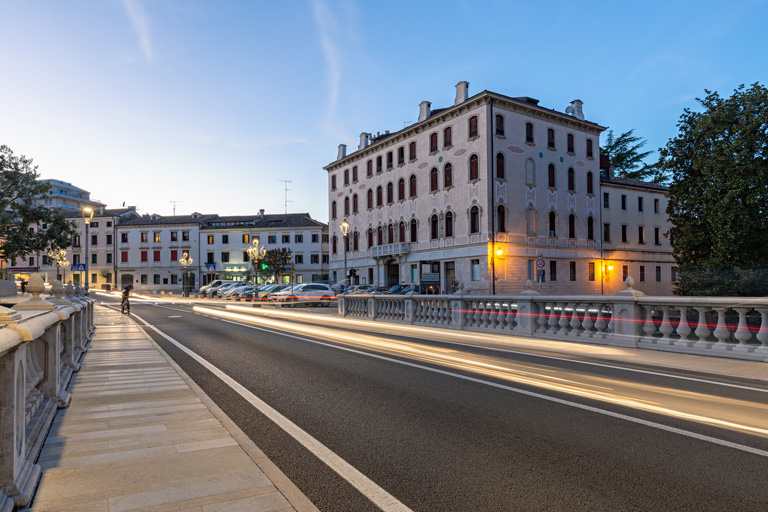
Palazzo Balbi-Valier – This building bears witness to the importance of the local economic and social fabric over the centuries. Built by the Venetian noble family of the same name in the early 19th century on the site of a pre-existing 17th-century villa, it stood at the center of a large manufacturing complex where the Balbi Valier family managed silk-processing activities. Until the Second World War, Marta Sammartini—one of the few female sculptors of the 20th century—lived here with her family.
Loggia dei granai – The building is located in the very central Piazza Balbi Valier, directly above the war memorial, and was commissioned by the Balbi Valier counts themselves. It dates back to the second half of the 19th century. Like Palazzo Vaccari, it was designed by engineer Ferdinando Chisini. The loggia was conceived with a commercial purpose, as the square hosted the grain and livestock market.
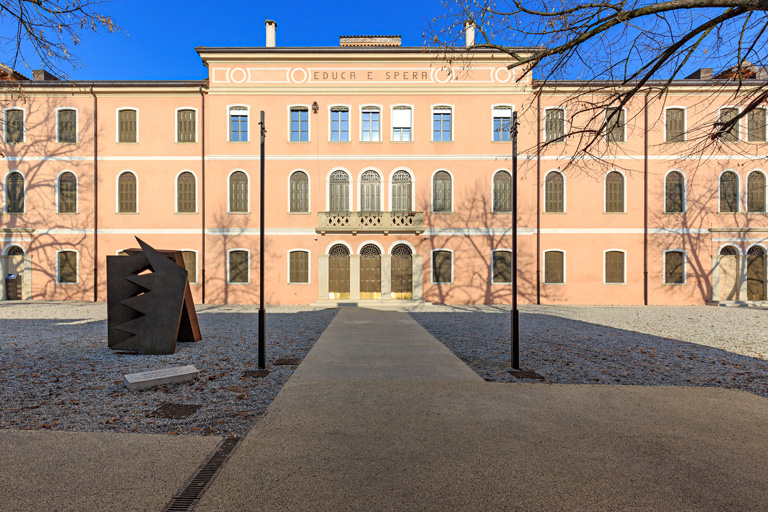
Palazzo Vaccari – Piazza Vittorio Emanuele II is still today the center of the town and the main marketplace, where Palazzo Vaccari—now the town hall—stands out. Recently restored and returned to the community, the building served as the city’s main elementary school during the 20th century. “Educate and hope,” reads the inscription on the rear façade, commissioned by the then mayor Antonio Schiratti.
Villa Brandolini – Built in the 18th century, it includes the villa, the barchessa (farm wing), the guesthouse, the garden, and the private chapel. In Venetian style, it is adorned with stucco decorations added after the villa’s construction. In the postwar period, local artist Emilio Fontana oversaw the decorative restoration. A hidden network of tunnels served as an ingenious system for water collection and distribution, and also as a refuge during the Second World War. The villa houses the “Toti dal Monte” music school and the Consortium for the Protection of Conegliano Valdobbiadene Prosecco Superiore DOCG.
Blessed Giuseppe Toniolo – An economist and sociologist of remarkable relevance, he devoted his life to promoting a social and economic model inspired by Christian values, centered on human dignity and the common good. Born in Treviso and beatified by the Church on April 29, 2012, his thought deeply influenced Christian social doctrine and continues to inspire those committed to building a more just and supportive society. Toniolo is buried in the cathedral of Pieve di Soligo.
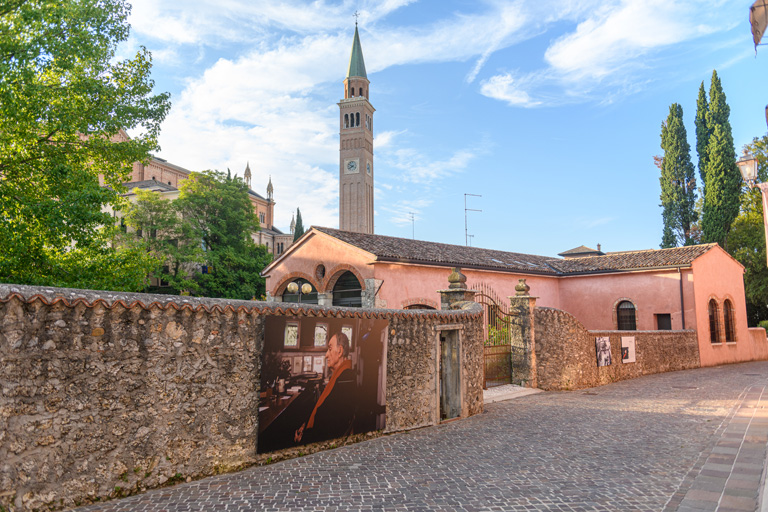
Andrea Zanzotto (poet) – One of the most significant Italian poets of the second half of the 20th century. He received prestigious awards: the San Babila Inediti (1950), the Feltrinelli Prize (1987), the Bagutta Prize (1999), and the Hölderlin Prize (2005), as well as several honorary degrees. In 1950 he entered the San Babila prize for unpublished works. The jury—composed of Montale, Quasimodo, and Ungaretti—declared him the winner with poems written between 1940 and 1948, later published in 1951 under the title *Behind the Landscape*. In 1976, the poet began collaborating with Federico Fellini on the writing of texts for *Casanova*.
Amantea - Cosenza
Villa d'Agri di Marsicovetere - Potenza
Pompei - Napoli
Roccaraso - Blockhaus
Grottammare - Fermo
Sasso Marconi - Corno alle Scale
Forte dei Marmi - Massa
La Spezia - Chiavari
Savona - Novi Ligure
Angera - Verbania
Aymavilles - Pila
Assago - Milano
Biasca (CH) - Carì (CH)
Tione di Trento - Andalo
Valdobbiadene - Pieve di Soligo
Agordo - Alleghe (Piani di Pezzè)
San Daniele del Friuli - Piancavallo
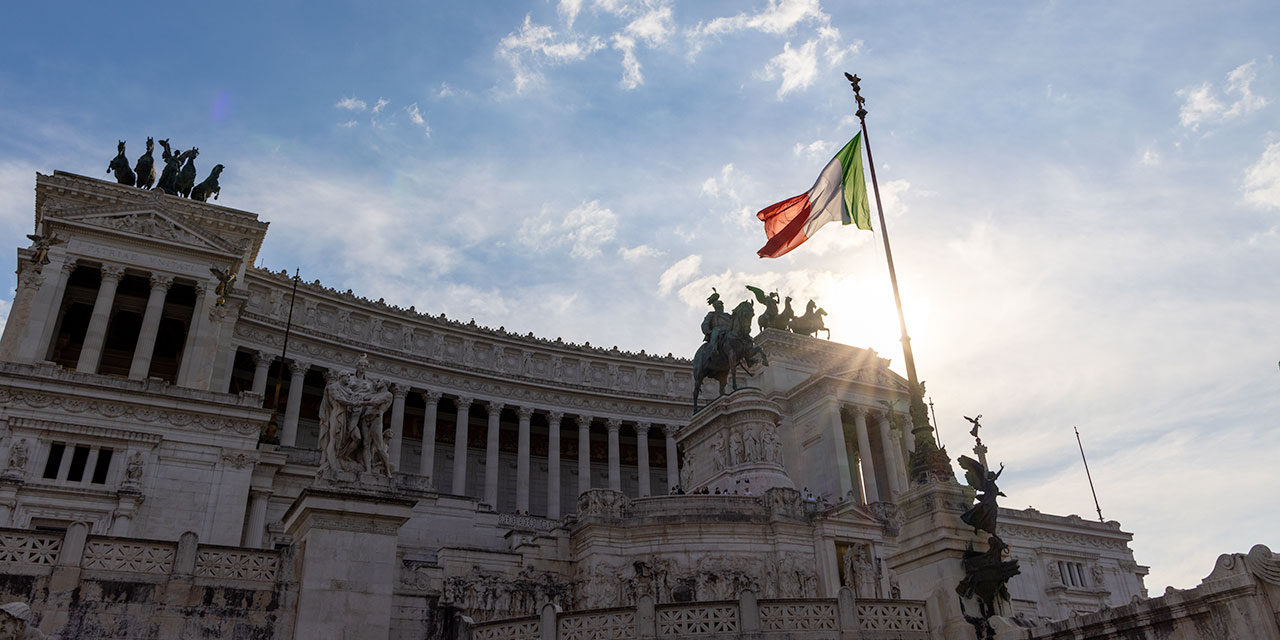
Roma - Roma