The Giro-E counts off regions like the beads on a rosary. Today it brings us to Friuli Venezia Giulia for the penultimate outing: stage 17. On the 50th anniversary of the earthquake that struck this region, it was only right to pay tribute to the victims before hitting the roads in search of thrills.
The Giro d’Italia has organised many initiatives to honour the resilience shown by the Friulian people following the 6.5-magnitude earthquake that struck this region on the evening of 6 May 1976, affecting 77 municipalities, causing 990 deaths and leaving over 45,000 people homeless. First of all, today’s Giro d’Italia stage starts in Gemona del Friuli, the town that suffered the highest number of casualties. Stage 20 of the 109th Giro is named “Gemona del Friuli 1976-2026 – Piancavallo”. A special pink jersey has been designed, produced by Castelli again, on which the sponsor “Io sono Friuli Venezia Giulia” – which has featured on the jersey since 8 May – is replaced by the historic words: “Il Friuli ringrazia e non dimentica” [Friuli gives thanks and won’t forget]. It will be worn for today’s stage only by the pink jersey holder. With this initiative, the Friuli Venezia Giulia Region is pursuing a dual objective: to promote the region through media exposure, and to convey a message that unites the people of this land. It is an invitation to remember the past, looking ahead without forgetting what has made the region what it is today.
The Giro-E paid its own respects to the memory of the 1976 earthquake by starting from San Daniele del Friuli, one of the towns affected by the quake. The Giro d’Italia Women will do the same by having the finish line for its third stage, on Monday 1 June, in Buja.
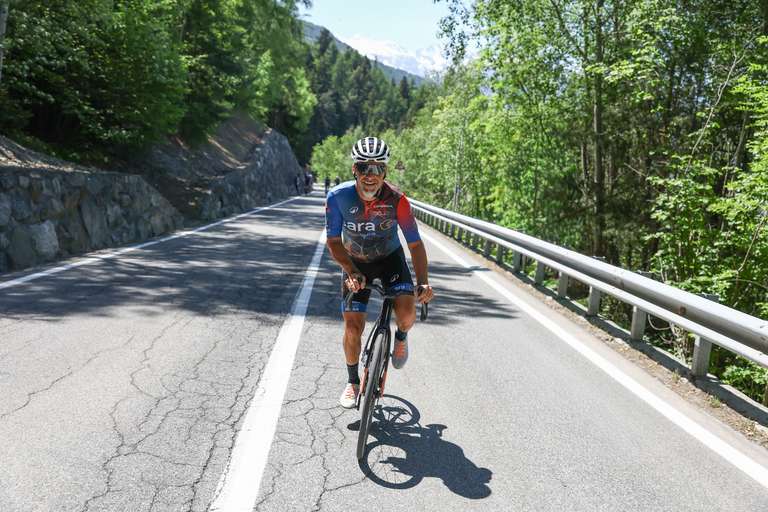
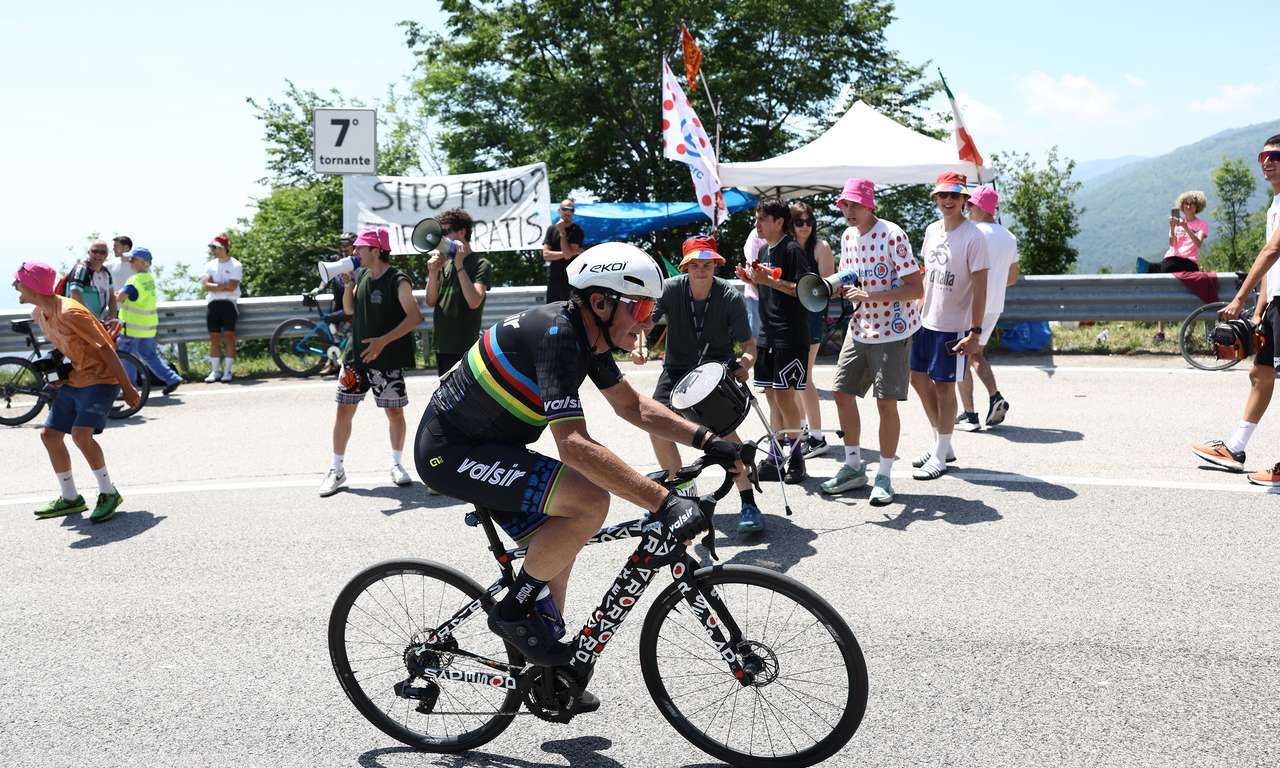
Getting back to the cycling, today’s stage certainly didn’t disappoint: 70 kilometres with over 1,500 metres of climbing. The route begins in San Daniele del Friuli and finishes in Piancavallo, after the e-cyclists have tackled the gruelling Piancavallo climb. The last real challenge before Sunday’s eagerly awaited finish in Rome.
San Daniele is the birthplace of the delicious cured ham of the same name – a source of healthy protein for those who do sport, including die-hard cyclists. The town sits perched on a hill overlooking the nearby plains, the surrounding terrain providing the perfect climate to produce San Daniele ham. If you come to visit, there’s plenty to feast your eyes on too: for example, the Guarneriana Library, one of Europe’s oldest public libraries, the Cathedral of St Michael the Archangel, and Gemona Gate, designed by Andrea Palladio.
Piancavallo meanwhile is the mountain sports capital of the Carnic Prealps, offering endless opportunities for fun in summer too. La Passeggiata delle Malghe (Mountain Hut Trai), for example, is a 12-kilometre loop that winds its way through woods and meadows, offering panoramic views of the plain and the chance to discover the traditional mountain pastures. It’s not too challenging and can create experiences that will live long in your heart.