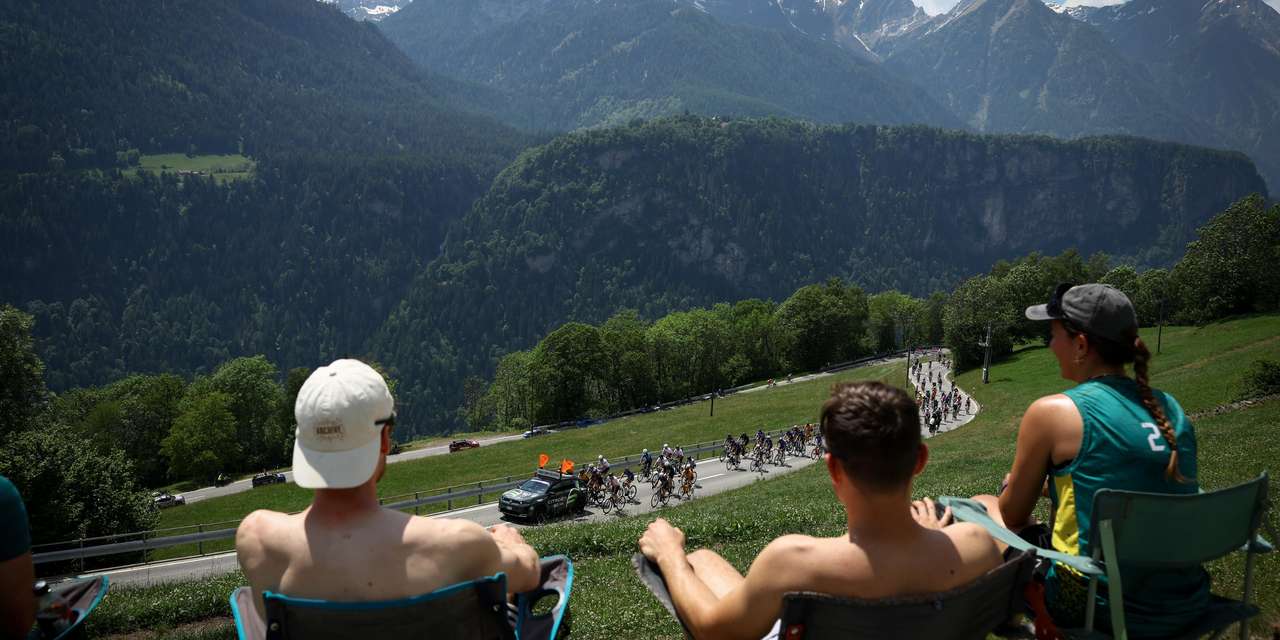
Today the Giro-E Enel 2026 headed beyond the borders of Italy for the first time, in what is now the event’s third week. Stage number 13 started in Biasca and ended in Cari, both of which are located in Switzerland. Although the stage was only 33.5km it was a gruelling one, with a positive difference in altitude of 1,400 metres and a long final climb which averaged 7.9% gradient, with peaks of 13%.
Featuring unspoiled views and ending at high altitude, it was a stage that was not for the faint of heart. It kicked off a tough third and final week, which will feature almost the same elevation gain as the first (7,700 metres instead of 7,600), but fewer kilometres (310 instead of 432), meaning it is considerably more taxing.
Biasca, in the Canton of Ticino and today’s starting point of the Giro-E, is part of the Tre Valli (Three Valleys – Riviera, Blenio, Leventina) region. Biasca, home to a philharmonic orchestra since 1920, was the first Ticino municipality to have a cinema, ten years after Paris. One of the first power plants in the Canton of Ticino was inaugurated there as early as 1895, which brought electricity and public lighting to the centre of the Tre Valli. Perhaps there has never been a place better suited to host the start of a stage of an “electric” Giro.
Out of the many villages along the way, Giornico is worth a stop. It’s a settlement which stands out for its stone houses, paved streets and two impressive arched bridges over the river Ticino. In Casa Stanga, recognisable by its façade on which you can admire over 50 coats of arms painted in the 16th century by travellers from the nobility who stopped in the village, there is the Leventina Museum where precious and interesting treasures originating from the valley are housed. In terms of monuments, the Romanesque church of San Nicolao stands out with its wonderfully preserved medieval frescoes.
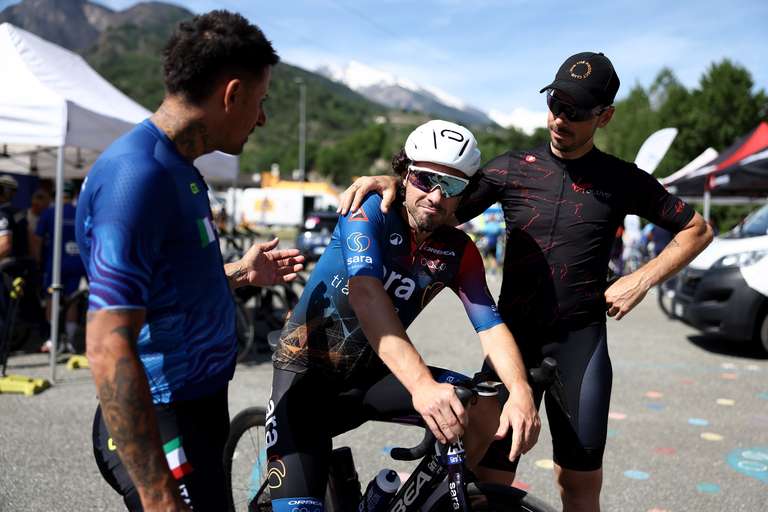
Today the group of e-cyclists included a number of sportsmen: for the second time we’ve got the motorcycling world champion Kevin Schwantz, Italian skiing icon Giorgio Rocca, and former Swiss pro Rubens Bertogliati, who led the 2002 Tour de France for two days.